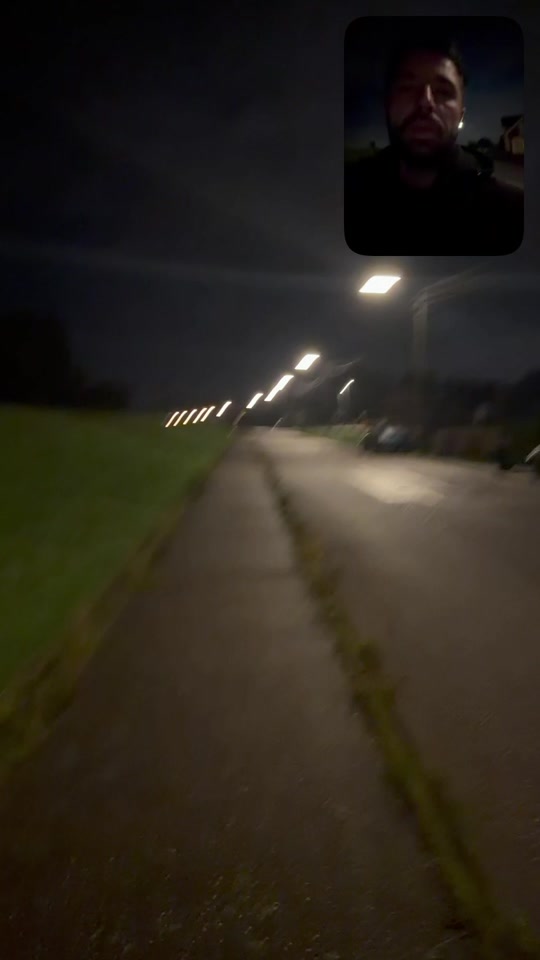
I could not sleep. There was still energy in my body, so I went outside and walked.
In the video, I compare myself to Beni in Beni ecën vetë. Alone on the road, moving, thinking. The reference made sense to me in that moment. Xhanfise Keko’s film follows an overprotected boy discovering life away from his parents. Albania’s film archive dates its production to 1975 and its premiere to January 1976.¹
My walk took me somewhere more immediate: the end of this year. What am I going to do with the days still in front of me?
My year-end reset: remove one thing, add one thing
Every year, I use the last hundred days as a reason to become more intentional. In the video, I talk about removing something that is doing me harm and adding something that does me good.
It can be less sugar. Less arguing. Less letting nervousness decide how I speak to people. Alongside that, something worth repeating: a walk, a moment of reflection, attention to what is happening inside me.
One thing to reduce. One thing to build.
For me, walking has become part of that. I talk in the video about the death of my mother, the challenges in business, my children and my private life. Walking gives me space to process feelings that otherwise keep moving around inside me.
That is my experience of grief. It is not proof that a walk can resolve everybody else’s pain.
Is it really 100 days until the new year?
I call this my hundred-day ritual in the video. The calendar deserves a precise answer alongside that framing.
From 24 September through 31 December 2026, including both dates, there are 99 days. Starting on 23 September gives exactly 100. The video was published on 24 September; its publication timestamp does not establish when it was recorded.
For a plan beginning on this article’s publication date, the count is 7 remaining September dates + 31 in October + 30 in November + 31 in December = 99.

The exact count matters when we calculate. It does not need to become another reason to wait. If you read this later, use the days you actually have.
What a small daily walk adds up to
In the video, I say I walk around 10,000–20,000 steps a day. That is my own account of my routine, not a measured dataset or a target everyone should copy.
Here is a smaller illustration. Ten minutes in the morning and ten in the evening make twenty minutes a day. Repeat that on all 99 dates and the total is 1,980 minutes, or 33 hours.
| Daily walking time | Total over 99 days |
|---|---|
| 10 minutes | 990 minutes / 16.5 hours |
| 20 minutes | 1,980 minutes / 33 hours |
| 30 minutes | 2,970 minutes / 49.5 hours |

These are time calculations, not promises about weight, mood or fitness. Missing a day changes the total; it does not erase the walks already taken.
For health context, WHO recommends adults get 150–300 minutes of moderate-intensity aerobic activity a week, or an equivalent amount of vigorous activity, and also stresses muscle-strengthening activity. Any amount of physical activity is better than none.² Thirty minutes on five days makes 150 minutes, but a slow reflective walk does not automatically meet the moderate-intensity benchmark. My step count and that recommendation measure different things.
Morning gives me direction. Evening gives me a review.
My morning walk is a place for gratitude, meditation and talking to what I feel is above us. I think about being alive and what I want to do with the day.
In the evening, the questions change. What happened? How do I feel? How is my body? What can I do better tomorrow?

That evening reflection becomes a compass for the next day. It connects with what I wrote about taking responsibility for emotional reactions: noticing what is happening inside me gives me something concrete to work with.
A simple way to make this usable is to write one sentence after the walk: what I noticed, or what I want to change tomorrow. Keep it small enough to repeat. The calendar gives the practice a boundary, not a guarantee that a habit will become automatic.
I want to arrive in January already moving
There is something strange about waiting for a new year to become the person we already know we want to work on becoming.
I want to arrive there having started. With a little more awareness of my reactions. With something useful already in my day.
And this reaches beyond me. In the video, I speak about our children benefiting when we become healthier, more creative parents. That connects to teaching responsibility through our own example. They get to see what it looks like when an adult keeps working on himself.
Tonight, that work looked like a road, some streetlights and another step.
Sources and calculation notes
-
1. Film reference: Albanian Central State Film Archive: Beni ecën vetë. Director Xhanfise Keko; production 1975; premiere 24 January 1976. The reference supplies context for the opening, not evidence about walking or health.
-
2. Activity guidance: WHO guidelines on physical activity and sedentary behaviour: at a glance. General adult guidance; personal step counts do not establish activity intensity.
-
Calendar and time: 24 September–31 December inclusive = 99 dates; checkpoints are day 1, 38, 68 and 99. Hours = daily minutes × 99 ÷ 60. Illustrations assume the same duration every day. Download the inputs and calculations.
-
Original video and thumbnail: Eduard Luta on TikTok. Published 2026-09-24. Research checked 24 September 2026.