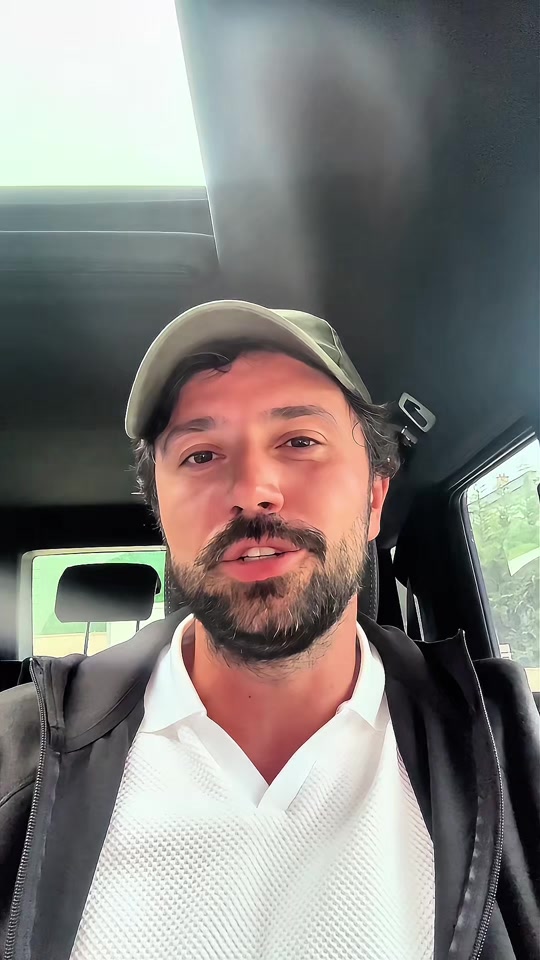
I started posting for two reasons. I say both in this video.
First, I wanted to develop my own voice. To be able to speak about what I think, what I have experienced and what is happening inside me, more freely.
Second, I wanted to make videos for myself at sixteen, seventeen, eighteen.
That is a very particular audience. Before the followers, before the reactions, there is a younger version of me carrying beliefs I would spend years trying to understand and update.
Talking to the person I used to be
The detail that matters in this clip is how long it took: years of working through beliefs formed when I was young. That is why those ages are the audience I name.
You can inherit an idea so early that it feels like part of your body. Later, something happens that no longer fits. You start asking where the belief came from, whether it is still useful, whether you even chose it.
For me, creating these videos is a way to put that investigation into words. Not to pretend the investigation is finished.
If I imagine speaking to my younger self, the task becomes more concrete than “say something impressive.” What did I misunderstand? What took me too long to question? What would I want him to examine for himself?
That last part matters. I do not want to replace one borrowed certainty with another just because the second one is mine.

A voice is allowed to develop
In the video I talk about seeing what comes to mind and what interesting things I can create. There is no finished brand manual behind that thought. There is an experiment: can I show up, speak honestly and discover what I actually have to say?
Finding a voice does not mean publishing every private detail or treating the first version of an opinion as sacred. Before posting, I would separate three things: what happened, what I think it means, and what I can actually support. If another person is part of the story, their privacy matters too.
That is also why these articles can add context to the clips. A short video can carry the feeling. Writing gives the explanation more room, including room to correct an overstatement or make a limitation visible.
I call speaking online a kind of therapy in the original clip. That describes how the expression feels to me; it is not a claim that public posting is clinical therapy or that it will feel helpful to everyone. A private notebook or a conversation may suit another person better.
My note about creating every day continues the experiment. It does not require every attempt to become a public performance.
I wanted to begin without pretending. Without needing to look perfect. Without having to invent something nobody had ever thought before.
I wanted to hear what my own voice would sound like once I let it speak.
Sources and calculation notes
-
This is a personal reflection grounded in the original video. The ages and two reasons for posting come from the clip. The questions for a younger self and the pre-publication distinctions are editorial expansions, not additional biographical events or direct quotations.
-
Original video and thumbnail: Eduard Luta on TikTok. Published 2026-05-19. Research checked 26 September 2026.