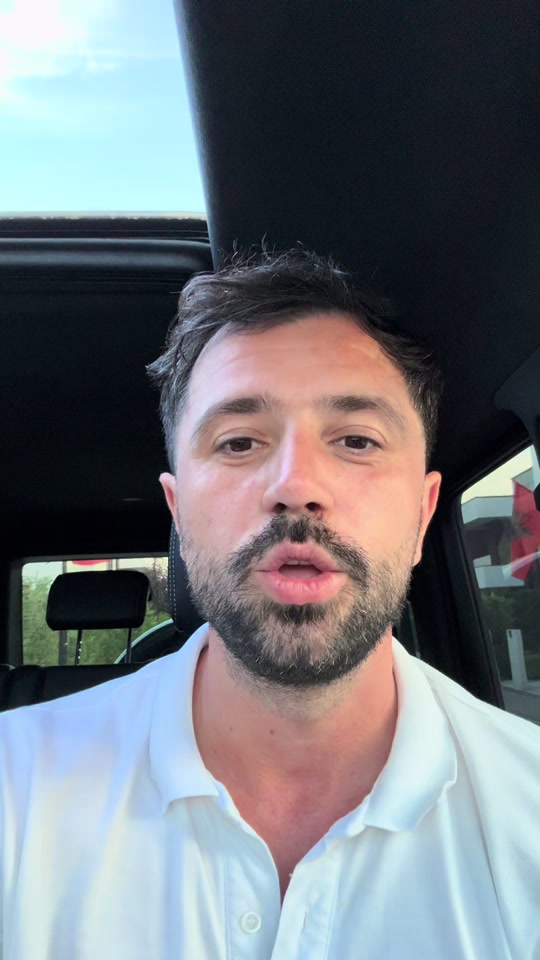
In this video I ask a simple question: what is the best way to be creative? My answer is to face the task of creating something, again and again.
Something new. Or something new to you.
That second part matters. If your first sentence has to be unlike every sentence ever written, you can spend the afternoon proving that you should not start. A video, a paragraph, a different approach to a familiar problem: these are places to begin without claiming to have reinvented the world.
The useful part of making many attempts
In the clip I talk about hundreds, even a thousand ideas. Those are rhetorical examples. I do not have a dataset showing that idea number 500 will be good, or that one of a thousand business ideas must make money.
Volume gives you material to examine. It does not remove the need to examine it.
Ten versions of the same vague thought may leave you exactly where you started. A smaller set that changes the audience, the example or the question can teach you more about what you are trying to say. That is the practical distinction I would use, rather than treating every extra idea as a winning lottery ticket.
For example, take one problem: explaining your work to someone who has never heard of it. Try an opening about their problem, another about a real situation, another about a common misunderstanding. Then show the clearest version to someone and ask what they understood. This is a suggested exercise, not a claim about what my own audience has done.

A small example you can count
Suppose you choose three short opening ideas per day for seven days. That is 3 × 7 = 21 rough openings. If you then choose three to develop, you have selected 3 ÷ 21 = 14.3%, rounded to one decimal place.
That percentage measures your selection, not quality. It is not a success rate and certainly not a predicted chance of going viral. You might publish none because the underlying point needs more work. You still have 21 attempts to compare instead of a blank page to resent.

The next question is concrete: what made the selected openings easier to understand? Were they specific? Did they reach the point sooner? Did a reader interpret them the way you intended? Keep that observation and let it shape the next attempt.
Daily practice is my invitation, not a moral judgment on people who need rest or have less time. Missing a day does not erase the work. And making something does not obligate you to publish it. Private drafts count as creating too.
My video about the inner voice looks at giving an idea room to appear. This one is about giving it a form you can actually inspect.
You do not need to feel like a creative person before you make the first thing.
Sources and calculation notes
-
The seven-day example is hypothetical: 3 × 7 = 21 openings; 3 ÷ 21 × 100 = 14.2857…%, rounded to 14.3%. Selected openings are a subset of drafts, not an additional quantity. Calculation inputs.
-
The video’s large idea counts and money claim are motivational language, not verified probabilities or promised earnings. The exercises are editorial suggestions.
-
Original video and thumbnail: Eduard Luta on TikTok. Published 2026-06-09. Research checked 26 September 2026.