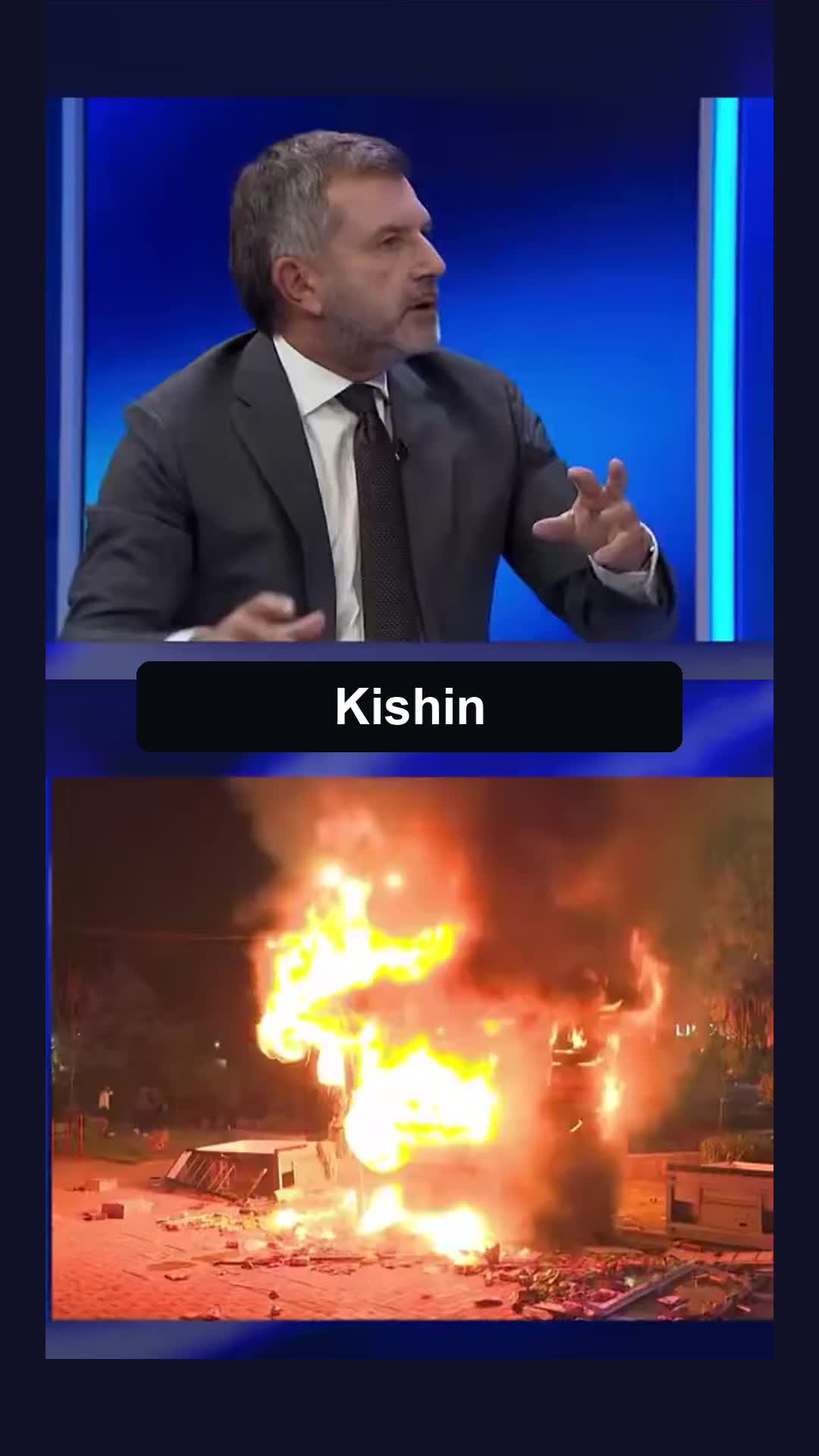
The clip I shared starts with biscuits and water. A television speaker describes people taking them from a kiosk, admits that his first reaction was condemnation, and then asks who benefits from the way kiosks are allocated in Tirana.[1]
That turn is what makes the clip worth discussing. We can become intensely interested in a small, vividly described act while barely looking at the decisions made behind an office door.
Public accountability should reach both. Taking someone’s goods does not become acceptable because we distrust powerful people. And condemning that act does not answer questions about how public space or commercial rights were allocated.
What the kiosk video says—and what it establishes
The speaker alleges political favoritism in the allocation of kiosks and contrasts it with public anger about young people taking goods. These are claims in the excerpt. The video is not a contract file, an ownership register or a judicial finding.
The article therefore does not establish the owners of the kiosks, the identities or ages of the people involved, the quantity or value of anything taken, or wrongdoing by the people named in the commentary. The speaker also generalises about social-support arrangements for kiosks in Greece and Italy; that countrywide comparison has not been verified here.
The edit combines a studio discussion with street and protest footage. That juxtaposition does not prove that every shot shows the same event or that the commentary accurately describes everyone visible. I shared a provocative argument; the research around it has to keep those limits visible.
One standard does not mean identical harm
A shop’s stock, a worker’s livelihood and the public’s interest all deserve attention. The person working behind a counter may not be the owner of the company or the beneficiary of an allocation decision. We cannot decide who should bear a loss from a logo or a few seconds of footage.
The constitutional starting point is clear: Article 18 of Albania’s Constitution establishes equality before the law, while Article 41 protects private property.[2] Those principles belong in the same conversation. The appropriate response still depends on the established facts and the applicable process.
Equal standards also do not mean pretending that every act causes the same damage. A loss at a kiosk and a proven misuse of public resources would require different evidence and could have very different consequences. Neither can be used as a receipt that cancels out the other.

Turn the accusation into questions that documents can answer
“Who owns the kiosks?” sounds like one question. In practice, it can hide several: who owns the land, who is authorised to use the location, who operates the business, and which company receives revenue? One answer cannot safely stand in for all the others.
For a concrete kiosk or group of locations, I would start with the site and the responsible authority. Then I would look for the relevant permission or allocation decision, its legal basis, the selection conditions, the signed agreement and any later changes. A lease, a permit and a public procurement contract should not be treated as interchangeable labels.
Albania’s Public Procurement Agency separates contract notices, winner notices and signed-contract notices on its portal.[3] That is useful where a procurement procedure applies: an announcement is not the same document as the eventual agreement. It does not establish that the kiosks in this video were allocated through that system.
The next questions concern performance. What was promised? What obligations were recorded? What do the available payment, inspection or audit records show? The public-administration code sets out transparency and impartiality as principles, and requires attention to relevant evidence.[4] We should be able to ask for a documented explanation without starting from a declaration of guilt.

Ask for the record, then judge the answer
The Information Commissioner’s guidance says that people may request existing public records, including administrative decisions and public contracts, subject to legal restrictions. It recommends checking the authority’s transparency programme first and explains that a requester does not have to justify their motives.[5]
A useful request identifies the location, time period and records sought. “Please provide the decision authorising use of this site, the applicable selection criteria and the signed agreement with amendments” is easier to answer than “Explain why everything is corrupt.” It also leaves a clearer record of what was supplied and what remains unanswered.
Missing documents should be identified as missing. An allegation should stay an allegation until supported. Article 30 of the Constitution protects the presumption of innocence.[6] That is compatible with demanding scrutiny; it means taking evidence seriously when scrutiny becomes an accusation.
I made a related distinction in the Sazan article about public interest and documents: political access, an official decision and a final agreement are different things. And a viral clip does not represent an entire community, even when it is emotionally powerful.
The speaker starts with a concrete example. The decisions behind a kiosk take more effort to examine.
I want our attention to survive that extra effort.
Sources and notes
- [1] Original video, published 17 October 2026. The original local edit and reviewed Albanian transcript establish the speaker’s argument, not the truth of the allegations or the provenance of every background shot.
- [2] Constitution of Albania, Article 18 and Article 41, published by the School of Magistrates’ electronic commentary portal.
- [3] Public Procurement Agency: distinct contract, winner and signed-contract notices. No specific kiosk tender, contract or concession was verified for this article.
- [4] Code of Administrative Procedures, Law 44/2015, Articles 5, 13 and 14, reproduced by the People’s Advocate.
- [5] Information Commissioner: guidance for individuals, including access to existing records and statutory restrictions.
- [6] Constitution, Article 30. Research checked 18 October 2026. The visuals are qualitative reading guides, not measured losses or findings of corruption. Source review and limits.