I was in Vienna thinking about Skanderbeg, his helmet, his sword, and what it means to defend something you believe belongs to your people. That is the feeling behind this short video. An object in a museum can pull a whole country into your head.
You imagine the person. The danger. The weight of deciding that something is worth protecting.
Then you look at the label. And another kind of responsibility begins: understanding what is actually known about the thing in front of you.
What the museum can establish
The Kunsthistorisches Museum describes the helmet as incorporating a fragment of an Italian sallet, probably from the second half of the fifteenth century. The connection of the helmet and sword with Skanderbeg is documented in the late sixteenth century; the helmet appears in the 1593 inventory of Archduke Ferdinand II’s collection at Ambras. That is the documentary trail the museum gives us.[1]
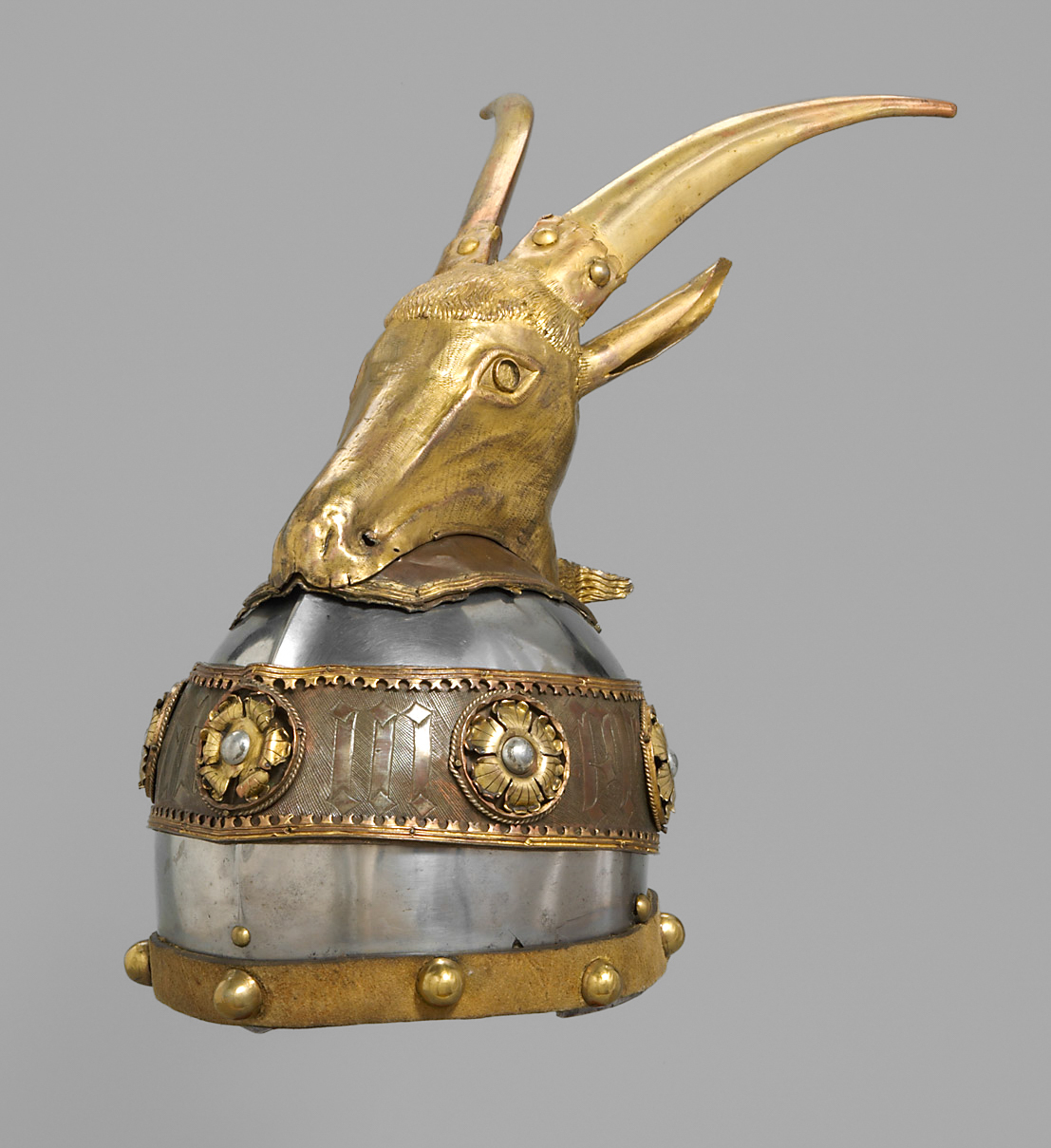

Skanderbeg died in 1468. The interval to that inventory is 1593 − 1468 = 125 years. This calculation measures the gap between his death and that surviving inventory reference. It does not date every part of the object, prove that he wore it, or prove that he did not.
That distinction matters. A traditional association and a documented chain of possession are different kinds of evidence. The museum’s own wording deserves more attention than a confident caption copied across the internet.

The feeling does not disappear when you ask questions
When I speak in the video about our country, our customs and our values, I am speaking about what the encounter brings up in me. That is personal. It is not a claim that I can reconstruct a battlefield from a display case.
There is a temptation to think that pride needs every story to be perfectly certain. I think that makes pride fragile. One awkward date appears, and suddenly the whole thing feels threatened.
I would rather be able to say: this object carries meaning for me, and I still want to know its history honestly. Asking where an attribution comes from is a way of taking it seriously.
How I would build a visit around it
The collection to look for is the Imperial Armoury in Vienna’s Neue Burg. Check the museum’s current visitor information and display arrangements before planning around one particular object.[2] This article is not a guarantee that an individual piece will be on view on your travel date.
My suggested way to spend time there is simple: first look at the object without trying to photograph everything. Then read the label. Separate the dates, materials and provenance from the story you brought with you. Finally ask what you want to carry home from that story.

For me, that last question goes beyond admiration for a historical figure. What does protecting a culture look like in ordinary life? Speaking the language with our children. Learning enough history to discuss it properly. Creating something worth handing on. Those are decisions available without a sword.
I wrote about the wider feeling of the city in Vienna and Albanian identity, and about how differently a child can understand belonging in a child’s idea of home.
The object stays in the museum. The responsibility comes home with us.
Sources and calculation notes
-
[1] KHM: Skanderbeg and the collection and helmet catalogue entry. The dates and attribution above follow the museum; emotional interpretation is mine.
-
[2] KHM: history of the Imperial Armoury.
-
Calculation: 1593 − 1468 = 125 years; a documentary interval, not a test of authenticity. Download the inputs.
-
Original video and thumbnail: Eduard Luta on TikTok. Published 2026-09-15. Research checked 23 September 2026.