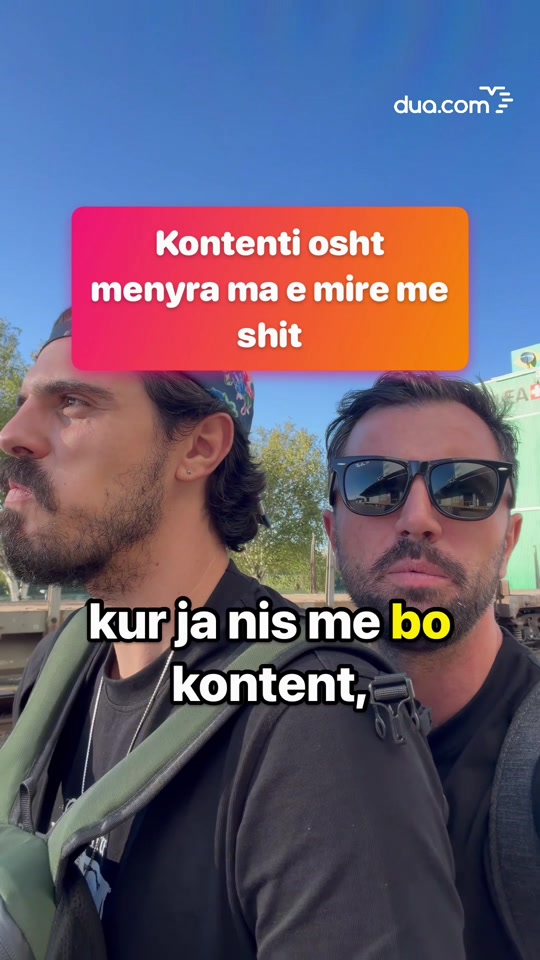
In this video, the question I put in front of the camera is also about what happens behind it: can you be the same person in both places?
I describe that as one of the hardest parts of starting to create content. You can speak freely when the phone is away, then feel yourself becoming a different version of the same person when it starts recording. In the clip, I argue for beginning anyway. You cannot get better at something you keep postponing.
At the end, I connect that practice to selling. I call content the best way to learn. That is my conviction, rather than a comparison that proves one method works best for every person or business. The useful question is what, exactly, we can practice.
The same person, with the camera on
The point is to bring the way you speak on camera closer to the way you speak when you are already comfortable. In the video, I imagine reaching the point where you can take out your phone and express yourself freely.
That does not require broadcasting every thought. You can prepare an explanation, choose what belongs in public and still sound like yourself. A pause can stay. Your accent can stay. So can an honest admission that you do not know something.
The aim I am describing is a voice you can recognize as your own.
This connects to why I started posting in the first place: finding a way to speak more freely. Here, the question becomes how to give that voice something useful to explain.

Give the practice something specific to work on
A recording gives you something concrete to revisit. Did you answer the question? Did the example make sense? Where did you spend too long getting to the point?
Toastmasters describes a practice cycle in which a speaker receives feedback and applies it to a later speech.[1] That is a useful model for this exercise: say something, find out what landed, then change a specific part.
Watching yourself needs a purpose. Presentation coach Joel Schwartzberg, writing for Toastmasters, warns that self-judgment can distort video review. He recommends practicing aloud and getting feedback from other people, alongside using video for particular aspects of delivery.[2]
So choose one thing to examine. Perhaps you want a clearer opening. Perhaps you keep using a word your listener does not understand. Ask someone what they took from the explanation before telling them what you intended. Their answer gives the next attempt a direction.
My piece about respecting the listener’s time asks a related question: what useful understanding did the other person receive?
Selling also means finding out what matters
Here is an imagined example. Someone offers a website service and records a video saying that they build beautiful websites. A more specific explanation could show how a visitor finds the opening hours, sees the service offered and requests an appointment.
Now there is something a potential customer can respond to. They might need that. They might explain that appointments are already easy, while their real problem is something else. That reply matters as much as the explanation.
The U.S. Small Business Administration’s market-research guidance asks about demand, alternatives and what customers pay. It also includes direct research with customers, such as interviews.[3] These are questions you can bring back into the next piece of content.
A camera lets you practice speaking. A customer can tell you whether you are addressing their problem.
Someone watching, understanding an offer and deciding to buy are different events. Keep them separate when judging your progress. Being more comfortable on camera is worth noticing; whether a service finds paying customers needs its own evidence.

Start with an explanation you can stand behind
Choose a question that somebody considering your work might ask. Explain the answer out loud, give a concrete example and make the next step clear. Record it if that helps. Listen, ask for feedback and try the explanation again.
You can begin with a private rehearsal. Publication is another decision, once the words say what you mean and the claims are ones you can support.
The energy in the original clip comes from getting started. I want to keep that energy while giving the repetition a direction: clearer words, more listening and a closer connection between the person speaking and the person who does the work.
Let the camera meet the person who is already there.
Sources and notes
-
[1] Toastmasters: The Navigator and Pathways project descriptions, especially Evaluation and Feedback. A description of its training method.
-
[2] Joel Schwartzberg, See For Yourself, Toastmasters, November 2020. Professional guidance on practice and self-assessment.
-
[3] U.S. Small Business Administration: Market research and competitive analysis. General customer-research guidance.
-
The website-service example and both diagrams are editorial exercises. They contain no measured sales results. “Best” and “unstoppable” express the conviction of the source clip and caption. Source and visual notes.
-
Original video and thumbnail: Eduard Luta on TikTok. Published 6 October 2026. Sources checked 10 October 2026.