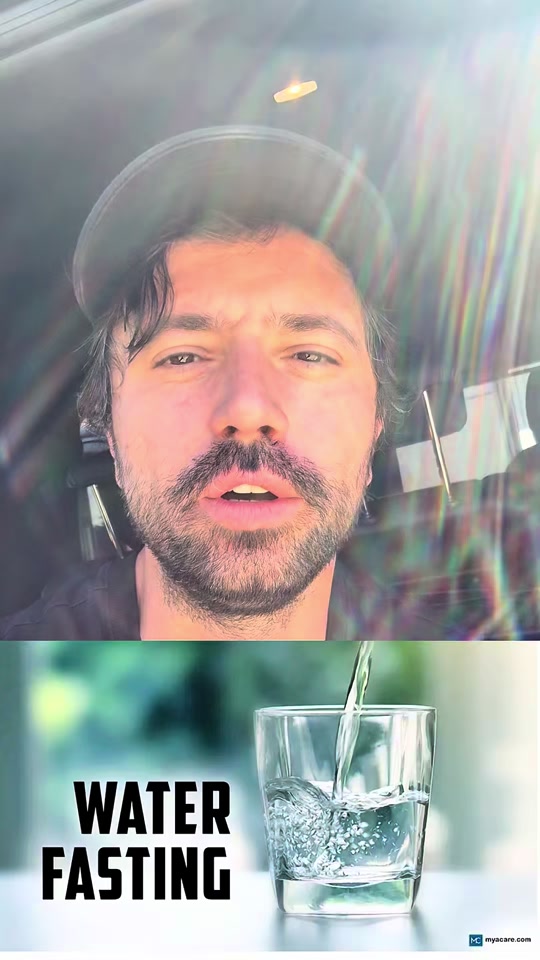
I am in the car announcing a water-only fast. In the video, I name a target of at least 100 hours and say that my reasons are spiritual as well as physical. I want to feel centred again.
The number needs context immediately: 100 hours is four days and four hours without food. This article records my intention at the time; it does not recommend copying that target. Johns Hopkins Medicine cautions that longer fasts can be dangerous and are not necessarily more beneficial.[1]
The story that stayed with me
I talk about reading Autobiography of a Yogi. I retell an exchange about a student’s fear of going without food and a teacher’s answer about trust in God. What caught my attention was the question of dependence: what do I believe sustains me, and what happens when familiar routines disappear?
That is a spiritual question. The dialogue is not medical evidence, and its dramatic language about death must not be taken as an instruction to ignore the body’s need for nourishment. Eating and seeking care are not failures of faith.
I can take a book seriously without making every image in it a literal rule for my body. The same distinction matters in my writing about thinking for yourself while listening to expertise.

Keep the intention; examine the method
The useful question underneath the video is what I wanted to make room for: reflection, prayer and attention. None requires reaching a particular number of hours without food. Sitting quietly, writing down what is troubling me or spending time in nature can express that intention without turning deprivation into an achievement.
A personal experience can tell you what something meant to me. It cannot establish that a practice is safe for you, or that an intense experience repaired an organ or prevented a disease. Those are different claims, requiring different evidence.
The later 24-hour update makes stronger biological claims. That article separates what I felt from what research can actually establish. The point of preserving the series is to show the experience honestly, including where the explanation needs correction.
My intention was to pay attention to my life. Care for the body belongs inside that intention.
Sources and calculation notes
-
[1] Johns Hopkins Medicine: intermittent fasting, updated 7 April 2026. Its warning about prolonged fasting is relevant here; this video is not a medically assessed plan.
-
Calculation: 100 ÷ 24 = 4 full days, with 4 hours remaining. This describes the announced target, not a verified duration or recommended schedule. Inputs.
-
The book anecdote is paraphrased as I tell it in the clip, not presented as a checked quotation. The thumbnail retains the graphic and watermark already present in the original video.
-
Original video and thumbnail: Eduard Luta on TikTok. Published 2026-05-30. Research checked 27 September 2026.