What if the most hated man in history was actually the most loyal?
After diving into the Gnostic perspective on Adam & Eve, the Monad and the Demiurge, Sophia and the Archons — my head got turned around. It was one of those moments where you shift toward the unknown and the crack widens.
You just don’t know what you don’t know.
The wider the extremes of perspective on any matter, the wider the crack in your soul. Gnostics opened something up in me. They made my definition of belief easier — especially after hearing theirs.
So the rabbit hole didn’t end with Eve & Adam, Sophia, the Demiurge, Archons, the Monad. It just started.
Stripping Jesus Down to the Man
I’ve spent the last few months learning about Jesus. Not the religion before him. Not the institution after him. Just the man.
I tried to remove everything: dogma, indoctrination, centuries of church politics. Just his life. How he was. What he taught. What he embodied.
And ohhh my god — what a beautiful journey.
Because you come to see and learn about the man. The perfect man. Who taught truth and embodied it. Who was actually very clear about the religious authorities of his time: they lost their way. They didn’t get it. Sound familiar?
The Betrayal Everyone Knows
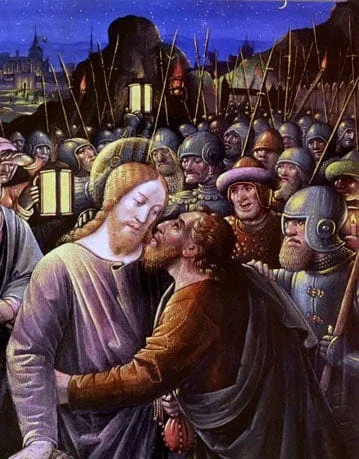
One of the most important events in that story is the betrayal of Judas. Everybody knows it. Judas has the deepest place in Hell — even Dante put him there, in the mouth of Satan himself.
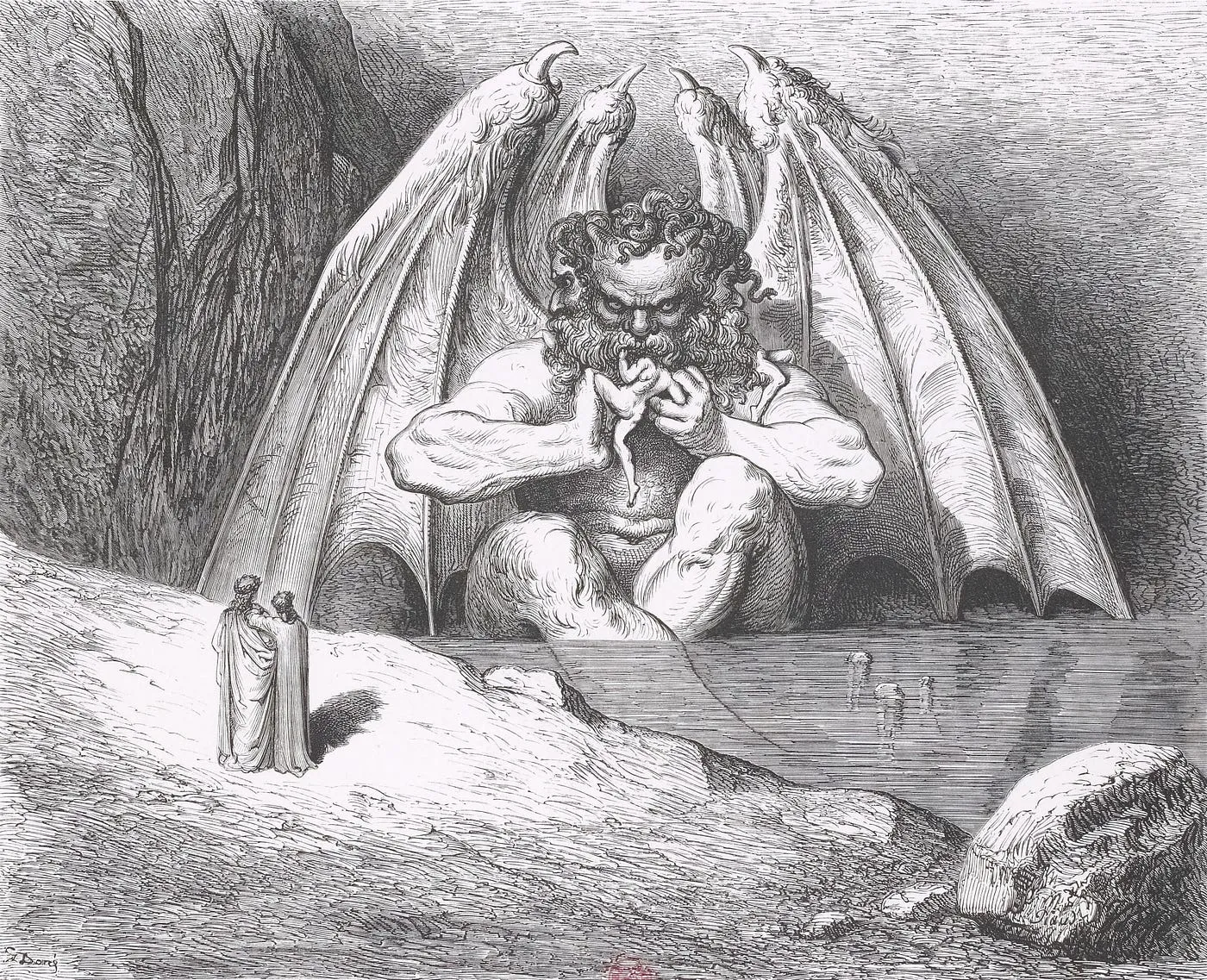
But what do the Gnostics think about it?
Tada. What a surprise. Down the rabbit hole we go…
Three Types of Humans
First, we need to understand that Gnostics see humanity in three spiritual capacities:
Hylics → Live entirely in material reality. Asleep.
Psychics → Religious, moral, but surface-level. Following rules without understanding.
Pneumatics → Carry a divine spark. Capable of gnosis — direct knowing. All after all, a weird name for the special ones :)
Pneumatics don’t just believe. They see.
They often feel alienated. They understand patterns others can’t perceive. They are rare. Isolated. Misunderstood.
In Gnosticism, Jesus’ role is not to save everyone.
It’s to awaken the pneumatics.
The One Who Actually Understood
In the Gospel of Judas — a Gnostic text the Church tried very hard to erase — the story flips completely.
The other disciples? They misunderstand Jesus. Completely. They worship the wrong God (the Demiurge — the flawed creator). Jesus literally mocks their rituals and prayers.
Judas alone understands:
- That Jesus is not here to build a religion
- That Jesus’ death is necessary for the cosmic plan
- That the physical body is not the true self
Jesus explicitly tells Judas:
“You will exceed all of them. For you will sacrifice the man that clothes me.”
Read that again.
The body must be handed over. The divine Christ must be released from flesh. Someone must do what is cosmically necessary but humanly unbearable.
That someone is Judas.
Tragic Loyalty
From the Gnostic perspective:
Betrayal = surface-level interpretation.
Obedience to hidden truth = deeper reality.
Judas does what no other disciple can psychologically bear.
What no moral believer would agree to.
What no loyal follower would dare to do.
Here’s the reframe that broke my brain:
Sometimes the person who understands you best is the one willing to be hated forever for doing what must be done.
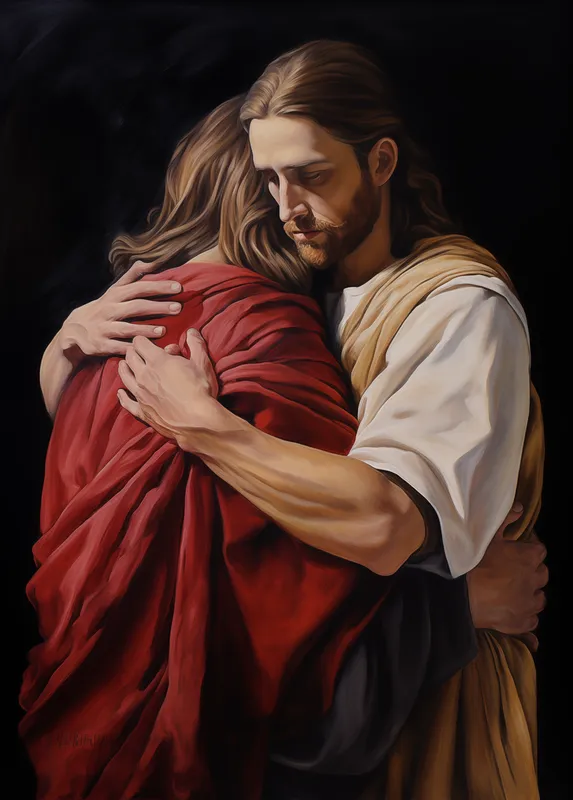
Judas accepts being cursed. Accepts isolation. Accepts eternal misunderstanding. Accepts being the villain of every story for two thousand years.
That’s not villainy. That’s tragic loyalty of the highest order.
The Pattern
Step back. Look at it from systems thinking:
- Insiders maintain the system
- Outsiders expose or break it
- The system always destroys the breaker
Judas is the necessary disruptor.
From inside the system → he’s a monster.
From outside the system → he’s the catalyst.
The Gnostics mythologized this pattern. But the pattern itself? It’s everywhere. In every revolution. Every paradigm shift. Every time someone does the “wrong” thing that history later calls necessary.
The Death Question
Important distinction: Gnostic texts don’t focus on Judas’ death. The detailed suicide story comes from canonical Christianity — the winners who wrote the history.
Canonical version: Judas feels remorse. Returns the money. Hangs himself. Guilt. Damnation. Case closed.
Gnostic interpretation: Judas is destroyed by the world he exposed. He cannot reintegrate. He bears unbearable isolation. If he dies, it’s tragic and existential — not moral failure.
A truth-bearer who had nowhere left to stand.
The symbolic meaning: Whether by hanging, execution, erasure, or mythic disappearance — the form doesn’t matter.
The meaning is clear: *The system cannot tolerate the one who sees through it.*Jesus is executed. Judas is erased. Mary Magdalene is silenced.
Same pattern. Different method.
What If We Got It All Wrong?
Have you ever been in a situation where you would ask a loved one to do the obvious right but general wrong? Something that only they would understand?
How is that different from controversial acts of a minority that move the needle of history?
This is crazy food for thought. It has not left me in the same place since I truly understood it.
Think about it: Jesus knew all along this would happen. He let it happen. He needed it to happen.
So what if the Gnostics are right? Again? What if religion did what it always does — built up the narrative they wanted, not the truth?
The Vatican is perhaps the best institution in history at controlling narrative. What do they know that they will never reveal? What texts are buried in those archives? What perspectives were systematically erased?
What if the Gnostics were telling a truth that power couldn’t allow to exist?
They silenced them then. They’re still silencing them now.
You will rarely hear this perspective. Until you go looking for it.
The Crack

I’m not here to tell you what to believe.
I’m here because my own beliefs cracked wide open. And once you see something, you can’t unsee it.
The question isn’t whether this is “true” in some absolute sense.
The question is: What else have we accepted without examination?
Who else got labeled the villain because the winners wrote the story?
What other friends got called traitors?
Snowden → Exposed the spies. Became the hunted.
Galileo → Said Earth moves. Church said heresy.
Semmelweis → Said wash your hands. Died in an asylum.
Assange → Let the truth leak. They made sure he couldn’t.
The crack in my understanding of this story has become a crack in my understanding of everything.
And I’m starting to think that’s exactly the point.