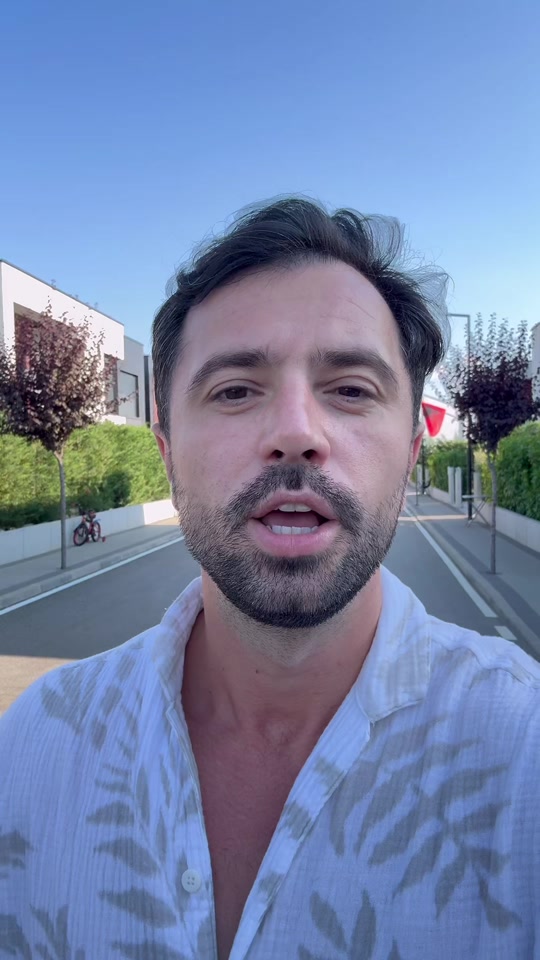
The more I explored spiritual experiences and the question of why we are here, the more often reincarnation entered the conversation. In this video I bring up an idea associated with Voltaire: perhaps being born again is no more astonishing than being born in the first place.
I do not present it as a settled answer in the recording. What interests me is the change of perspective. We treat being alive as ordinary because it is already happening. Then we treat a second life as an unimaginable interruption of the ordinary.
But the first part was never small.
Where the line actually comes from
The thought appears in chapter four of Voltaire’s The Princess of Babylon. The speaker is a phoenix addressing Formosante after returning to life. The phoenix points to transformations in nature; the princess then asks a sharper question about whether a being remade from ashes is precisely the same person with the same soul. [1]
That context matters. This is dialogue in a philosophical tale, not a scientific finding or a simple declaration that human reincarnation has been demonstrated. The next question in the story is already about the difficulty the memorable line leaves open.

Renewal is not the same as personal identity
A tree can grow where a seed was planted. That image can make renewal feel natural. It does not by itself establish that a person’s memories, identity or soul continue into another body.
There are several questions inside the one word. Does something continue after death? If it does, what continues? What would make that continuation the same person rather than a new life? Different answers produce different ideas of reincarnation.
I do not need to solve them all to recognise why the thought catches me. Wonder can begin a question. It should not have to pretend to be its proof.
Bring the question back to this life
For me, the useful turn is not to wait for a later existence to make this one meaningful. If being here is already extraordinary, then the familiar day deserves another look: the conversation, the person in front of me, the things I postpone because I assume there will be time.
This connects with my reflection on fear of death. The spiritual interpretation is personal. The invitation to pay attention is available even to someone who does not share it.
You can remain uncertain about another life and still be less careless with this one.
Sources and calculation notes
-
[1] Voltaire: La Princesse de Babylone, complete primary text, chapter IV, first published 1768. The phoenix’s argument and Formosante’s follow-up are literary dialogue. The article paraphrases them rather than treating them as empirical evidence.
-
The diagram separates questions; it does not assign probabilities to spiritual beliefs.
-
Original video and thumbnail: Eduard Luta on TikTok. Published 2026-06-27. Research checked 26 September 2026.