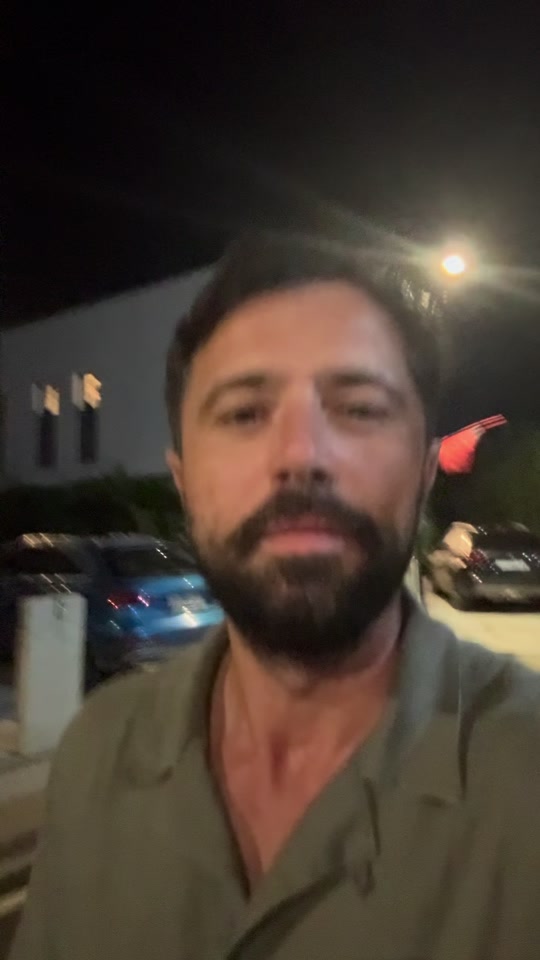
Imagine spending three days with someone you love without speaking to them. In this video, I remember doing that with my wife roughly four years earlier. We rented a villa and made our own agreement: no talking, no phone, no television and no reading. We allowed ourselves to meditate and write.
The arithmetic is simple: 72 hours ÷ 24 = three days. What occupied those days is harder to summarise. With less new material coming in, I had more time with the thoughts, ideas and unresolved things already there.
Our retreat was a private experiment
The caption calls it a “Vipassana experience.” That needs a distinction. This was the arrangement I describe with my wife, not a documented completion of an official course.
In S. N. Goenka’s tradition, the introductory course is a structured ten-day programme with teachers. Its discipline includes silence and no reading or writing.[1] Our three days together, with writing allowed, should not be presented as the same format.
| Detail | Our arrangement in the video | Goenka-tradition introductory course |
|---|---|---|
| Duration | Three days | Ten days |
| Writing | We allowed it | Not permitted |
| Setting | A villa we rented | An organised course |
This comparison identifies two different arrangements. It does not score their spiritual value or suggest that duration measures insight.

The experience we compared afterwards
I describe something that still gives me goosebumps: when we spoke again, my wife and I felt that our accounts of an inner experience matched. We interpreted it as a connection to an earlier life in India.
That is how I describe and understand the experience. The video cannot establish a past life, telepathy or an independently verified match between two accounts. It contains my later recollection, not separately recorded observations from the retreat. The feeling of connection can be meaningful without turning it into a scientific finding.
What I return to at the end of the clip is the time I had to sit with myself. No performance, no fresh distraction, no conversation to keep moving away from the uncomfortable part.
Keep room for support
A positive memory is not a universal retreat recommendation. NCCIH notes that difficult experiences can occur with meditation and advises against using it to replace or delay medical care.[2] Silence should not become a rule that stops someone asking for help.
For me, the lasting question is smaller than the extraordinary story: what do I notice when I stop filling every gap? It connects with my reflection on Autobiography of a Yogi and the space between an experience and the meaning I give it.
Sources and calculation notes
-
[1] Dhamma Niranjana: introductory courses and Dhamma.org: code of discipline. These describe that specific teaching tradition, not every use of the word Vipassana.
-
[2] NCCIH: meditation and mindfulness, effectiveness and safety.
-
Duration conversion: 72 ÷ 24 = 3. The timing and shared experience are personal recollections. No exact retreat date or supernatural mechanism is verified.
-
Original video and thumbnail: Eduard Luta on TikTok. Published 2026-06-24. Research checked 27 September 2026.