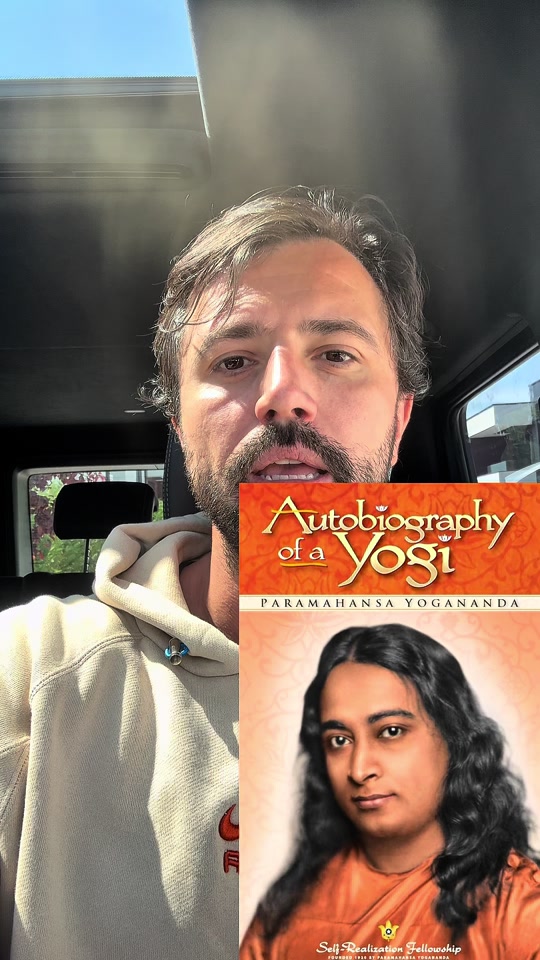
I am in the car talking about a book I have started: Autobiography of a Yogi by Paramahansa Yogananda. I mention Steve Jobs, then move quite quickly to something more personal: guilt, imperfection and the difficulty of forgiving yourself.
The book’s publisher, Self-Realization Fellowship, dates its first publication to 1946 and reports that copies were given to guests at Jobs’ memorial service.[1] That is a concrete connection. It does not establish that every idea in the book is true, or that reading it produces the same experience in everyone.
What I took from the reading
My reflection is that none of us gets through life perfectly. There are things we have done, reactions we are ashamed of and situations we handled on autopilot. If I spend all my energy proving that I was right, I never get to understand what happened.
In the video I connect spiritual growth, in my own relationship with God, with becoming able to accept those imperfect parts of myself. This is my interpretation of the reading, not a quotation from a specific passage.
Self-forgiveness, as I use it here, is not permission to pretend that nothing happened. It is a way to stop making self-defence the only response available. I can acknowledge an action, consider its effect and decide what I need to do differently.

Understanding someone does not erase the harm
The next movement in the clip is outward. When I recognise how difficult it can be to face my own fear, shame or fixed ideas, I have more reason to be curious about other people’s reactions too.
That does not mean excusing every action or surrendering a boundary. It means allowing an explanation to be more complicated than “this person is bad.” I can try to understand somebody and still say that a behaviour needs to stop.
A practical example, added here to make the point concrete: after snapping at someone, I can name what I did, apologise without making them responsible for my mood and change how I handle the next disagreement. That is more useful than either endless self-condemnation or a spiritual explanation that avoids responsibility.
A belief has to meet everyday life
I speak strongly in the video about finding God and becoming a better person. That is a statement of my faith, not evidence that believers are morally superior or that people without religion cannot be compassionate.
The test I care about in this reflection is conduct: do I pause before reacting, listen more carefully and look for an answer that considers the person in front of me? The story about apologies on a road trip brings the same question into ordinary relationships.
A book can open a door. I still have to decide how I behave when I walk through it.
Sources and calculation notes
-
[1] Self-Realization Fellowship: book and publication history and 75th-anniversary note, 8 November 2021. The memorial-gift statement is attributed to the publisher; no exact “favourite book” quotation from Jobs is asserted.
-
The personal lessons and apology example are reflections, not claims that the book treats illness or that spiritual belief guarantees ethical behaviour. The cover image is part of the original video thumbnail.
-
Original video and thumbnail: Eduard Luta on TikTok. Published 2026-06-01. Research checked 27 September 2026.