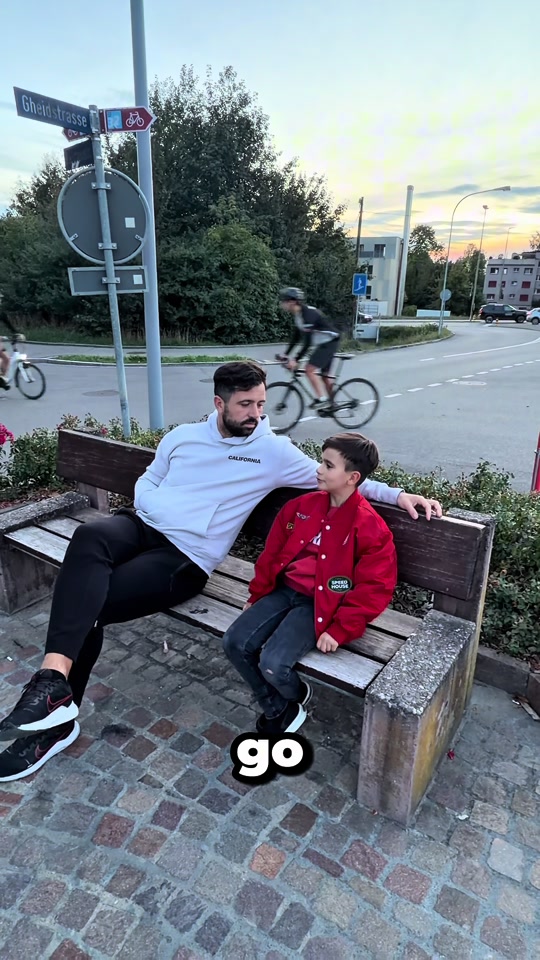
The caption says we have the best Spider-Man at home. It is a small family joke, attached to a short clip. I do not need to turn it into proof that my child is exceptional. The moment is already enough.
What it opens for me is the space between an adult looking at a child and an adult joining the child’s imagination. We can be physically nearby and still insist that everything happen in our language, at our pace, for our camera.
Sometimes the better move is to enter the game without taking it over.
A character gives the game a starting point
The American Academy of Pediatrics’ HealthyChildren guidance describes pretend play as an opportunity to practise language, taking turns and different roles. It encourages adults to let children help lead the imagined world. That is general guidance; a fourteen-second video cannot measure a child’s development. Pretend-play guidance.
A superhero can be the beginning of a story rather than an instruction to fight. Who needs help? What has gone missing? Can the hero ask someone else for an idea? Those questions leave more space than telling a child exactly what the hero must do.

These are possible games, not a description of what happened after the clip. A toy rescue, a drawn city or a conversation between characters can all work without recreating dangerous stunts.
Join, then leave some room
I would ask what part I am supposed to play. Then listen to the answer. If I immediately correct the plot, improve the dialogue and supply the ending, I have made my own performance out of the child’s invitation.
A simple boundary can stay inside the fun: people do not get hurt, nobody has to play a role they dislike, and “stop” ends the action. The story can be dramatic while the bodies stay safe.

The adult still takes responsibility for the space. Imagination does not turn a high ledge into a safe place to jump. There is no need to film a more impressive version of a moment that already made us smile.
Keep the memory bigger than the post
Sharing a family clip is one small part of family life. The relationship includes the moments that never become content: the repeated question, the interrupted conversation, the game that makes sense only to the child.
That is the same attention behind making room for your child and teaching responsibility with support. Presence and boundaries can exist together.
The best part of having a hero at home is getting invited into the story.
Sources and calculation notes
-
HealthyChildren, pretend play, updated 24 March 2023. General parenting context, not an assessment of the child in the video.
-
Both diagrams contain suggested activities and boundaries. No developmental scores or measured benefits are invented.
-
Original video and thumbnail: Eduard Luta on TikTok. Published 2026-09-17. Research checked 23 September 2026.