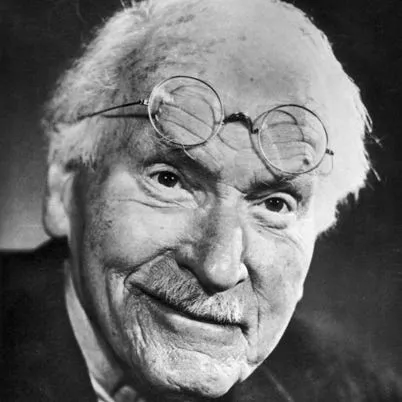
C. G. Jung
I first learned about C. G. Jung through the concept of synchronicities — those strange coincidences that seem too meaningful to be random.
It was after my first experiences with ayahuasca that I learned and started noticing these patterns — moments when inner experience and outer events lined up in ways that felt impossible to explain.
Later, through reading books like Man’s Search for Meaning by Viktor Frankl, and through exploring the works of Nietzsche and Freud, I came to realize that Jung was one of the main figures in psychology.
But what fascinated me most was how differently he saw it. He didn’t just study psychology from the outside — he crossed over to the other side to live it. Jung intentionally induced himself into a state of psychosis — for at least six years.
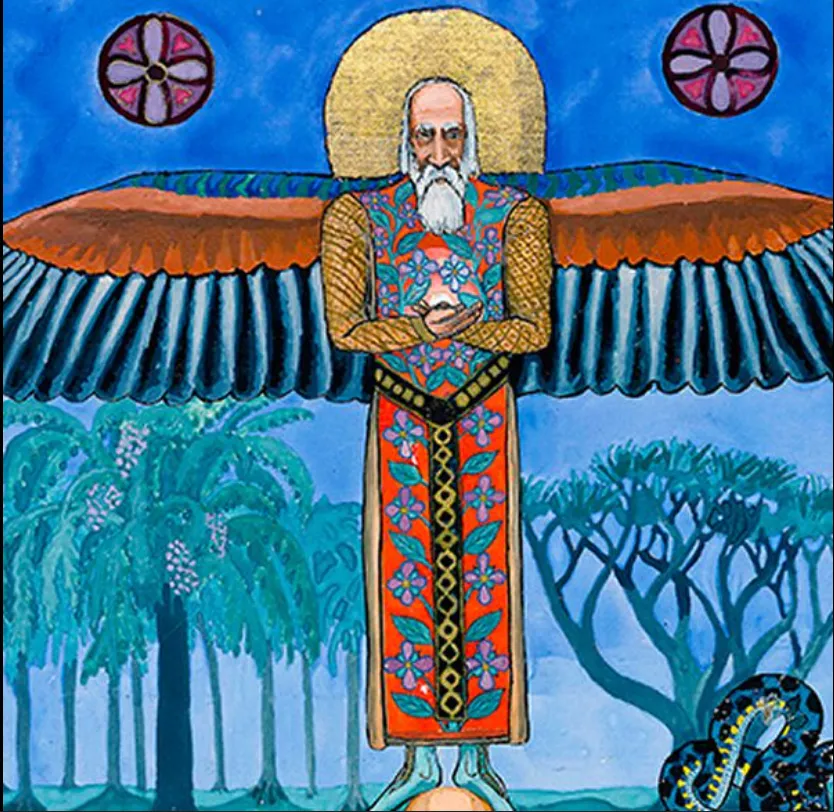
He let the visions come, he recorded them, he lived them — all to receive and understand the messages from the depths of the soul.
At one point, he even communicated with a figure named Philemon — a spirit he believed had also visited Buddha, Muhammad, and Christ.
Jung was faced with a choice: to either step into the role of a prophet, or to stay and continue his work as a psychologist.
He chose the latter — and because of that, the world received a new way to understand the soul.
When I first came across Jung’s Red Book, I didn’t know what to expect.
It wasn’t just a book — it was a diary of the soul. A living record of a man who dared to step beyond the borders of rational thinking and map the landscape of his own inner world.
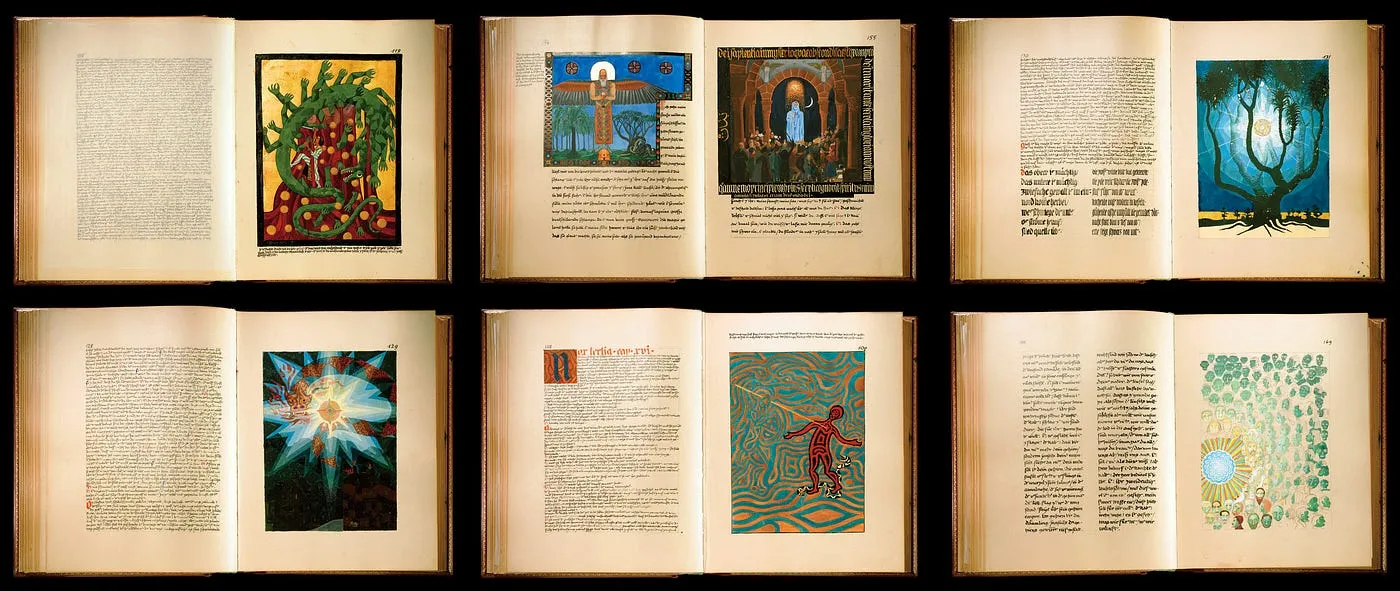
The Red Book wasn’t published until many decades after Jung’s death.
It stayed hidden, locked away, maybe because it was too personal, too raw, too much for the world to understand at the time. And maybe Jung knew that its real meaning would only unfold much later, just like the symbols inside the book unfold for each person through their own life.
In his work with the Red Book, Jung talks about the importance of writing down dreams, visions, and imaginations — in a good-quality book, something that feels serious.
The point is not to try to understand what you see right away.
The unconscious speaks in images and symbols, and it doesn’t explain itself in simple ways. The task is to capture everything as clearly and honestly as you can. Later, with time, the meaning might show itself.
It becomes a window into your own soul.
What stayed with me the most is that Jung didn’t just record what appeared — he interacted with it. When an entity, or person appeared, he would not simply accept their presence or do what they asked him to, he would ask them why they had come, and he would not act until they revealed their purpose.
Without this interaction, he believed, we miss the real message.
Dreams and visions are not just messages to observe — they are experiences to take part in.
Jung also explained that the unconscious isn’t just personal.
There are two layers — one made up of your own forgotten memories and feelings, and the other shared by everyone: the collective unconscious.
Symbols live there, and they are far more powerful than simple images.
They carry meanings that words alone can never fully explain.
Another thing that really spoke to me:
Life doesn’t just bring the spirit of the time — the surface events and culture we live through — but also the spirit of the depths, the deeper forces moving underneath. Through synchronicities, life tries to send us messages.
And the more we live on autopilot — unaware and unconscious — the more we miss them. Most of the time, we only understand these moments much later, when we have lived enough to see their meaning unfold.
Keeping a book like this — a diary of the soul — is not about telling a straight story. It’s about watching something unfold. It’s about seeing the invisible thread that connects moments, images, and feelings across time.
Jung called it Liber Novus, the Red Book, but to me, it feels like something very old — a way to let the soul speak without forcing it into simple explanations.
Do you believe, man of this time, that laughter is lower than worship? Where is your measure, false measurer? The sum of life decides in laughter and in worship, not your judgment.