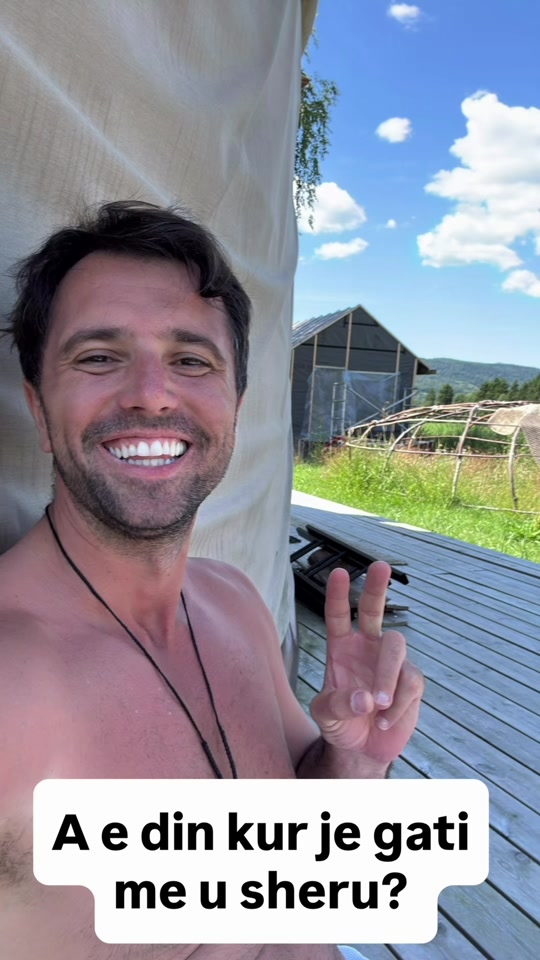
The video is only a few seconds long. I am smiling, holding up a peace sign, and the caption connects feeling closer to healing with wanting to become a kid again.
There is a feeling behind that sentence. The moment when everything does not have to be defended, explained or useful. When you can laugh without first checking whether you look serious enough.
I use “healing” here as a personal metaphor. A playful moment cannot tell us whether somebody has recovered from an illness or resolved a difficult past. It can still matter without carrying that claim.
What I want back from childhood
Curiosity. The willingness to try something badly. The ability to get interested in an ordinary thing without immediately asking what it will earn.
I do not want to give up the responsibilities that come with being an adult. The people who depend on me still need me. The bills do not disappear because I am in a good mood.
The distinction is useful: I can take responsibility seriously without making seriousness my entire personality.

That gives the thought a practical test. Does the playful moment leave me more available for my life, or am I using it to disappear from something I need to face? The same activity can serve different purposes on different days. The question asks for honesty, not a score.
What research can add
A randomised study by Proyer and colleagues included 533 participants, comparing three week-long playfulness activities with a placebo condition. It reported increases in playfulness and some short-term improvements in self-reported wellbeing. It does not establish that becoming playful cures a condition, or that every person will benefit in the same way. Study abstract, Applied Psychology: Health and Well-Being.
That is a modest finding, and it is enough for this conversation. We do not need to turn a smile into a medical promise to take it seriously.
Make room for one small experiment
Here is an ordinary possibility: choose something you can do for a few minutes without having to be good at it. Draw a ridiculous picture. Invent a game with your child. Dance to a song in the kitchen. These are suggestions, not scenes I am claiming happened in the clip.

Notice what happened afterwards. Did you enjoy it? Did you feel awkward? Was there no difference? All three are possible. There is no need to force a transformation or turn leisure into another performance target.
I like the version that can fit inside real life. A small opening, then back to the day. If the activity becomes a way to repeatedly avoid an important conversation or commitment, that deserves its own attention.
Let the playful part stay
I saw a related possibility during our visit to the Swiss Museum of Transport: a shared experience gives adults and children something to discover together. You can be the parent and still be curious.
And teaching responsibility does not require removing all lightness from family life. Practice can have room for mistakes and laughter.
The feeling in the video is simple. For a moment, I do not need to hold myself so tightly.
I want to leave some room for that person too.
Sources and calculation notes
-
Research: Proyer, Gander, Brauer and Chick, Can Playfulness Be Stimulated?, published online 2020, journal volume 2021. Randomised, placebo-controlled online study; self-report measures. No clinical conclusion is drawn here.
-
Both diagrams are editorial reflection aids. They are not diagnostic tools, study outcome charts or a treatment programme. The video caption supplies the metaphor, not scientific evidence.
-
Original video and thumbnail: Eduard Luta on TikTok. Published 2026-09-22. Research checked 23 September 2026.