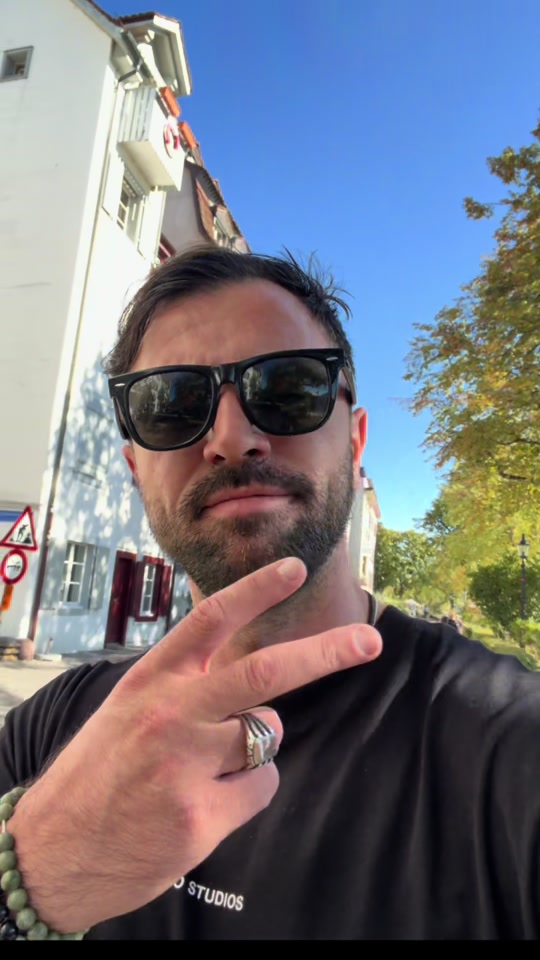
Someone tells you they have worked out all of life’s secrets. They speak with certainty. But how much of that certainty is reflected in the way they live?
That is the frustration behind this video. I question people who offer complete answers while seeming unhappy with their own everyday lives. Then I turn the same question back on myself. Before I position myself as someone who has everything solved, I need to keep working on my own life.
There is a limit to that judgment, too. We do not see a person’s whole relationship, family life or state of mind from the outside. Someone can struggle and still have something useful to teach. The point I want to keep is the need for consistency and self-examination, not a demand that every person giving advice must have a perfect life.
One success does not settle every part of life
In the clip, I talk about life having many facets. Getting something right in one area does not mean I have reached the same point everywhere else.
A work goal, a relationship and the ability to enjoy ordinary time are different things. It is possible to appreciate an achievement while admitting that another part of life needs attention. There is no single score that makes those differences disappear.

That is why I want to keep my ego down. If I convince myself too early that I have already arrived, I give myself less reason to ask questions. The more I experience, the more I can recognise things I have not yet understood.
Humility can leave room for effort
Psychologists use intellectual humility for recognising limits in what we know. In five studies, Porter and colleagues found it associated with behaviours such as pursuing learning after difficulty. In one experiment, participants encouraged towards humility invested more effort in learning a topic they had struggled with.[1]
That is evidence about learning tasks, not proof that humility guarantees a happy family or business success. It gives a narrower, useful idea: admitting a gap can coexist with making an effort to close it.
I do not need to pretend I know nothing. I need to be able to say what I know, where my experience ends and what might change my mind.
A check I can return to
Here is a practical way to turn the reflection into questions. This is an editorial exercise, not a psychological test: name one thing that went well, one area where you still need to learn and one action you can actually take next.
The action might be asking for feedback, listening without preparing a defence or trying a task you have avoided. The useful part is its connection to a specific gap. Writing down “be better” leaves too much unanswered.

This connects with growing without losing yourself for fame and the thought that belittling others does not help you grow. Progress becomes harder to see when all the attention goes into protecting an image.
I want to enjoy what I have reached and stay curious about what comes next. There is still more to see, learn and experience. Remembering that is part of moving forward.
Sources and notes
-
[1] Porter, Schumann, Selmeczy and Trzesniewski (2020), Intellectual humility predicts mastery behaviors when learning, Learning and Individual Differences, 80, 101888; DOI 10.1016/j.lindif.2020.101888. Five studies of learning behaviour, with observational and experimental designs; not a measure of whole-life success.
-
The diagrams and three-question exercise are editorial illustrations. They contain no measured scores or promised outcomes. Source and visual notes.
-
Original video and thumbnail: Eduard Luta on TikTok. Published 9 October 2026. Sources checked 16 October 2026.