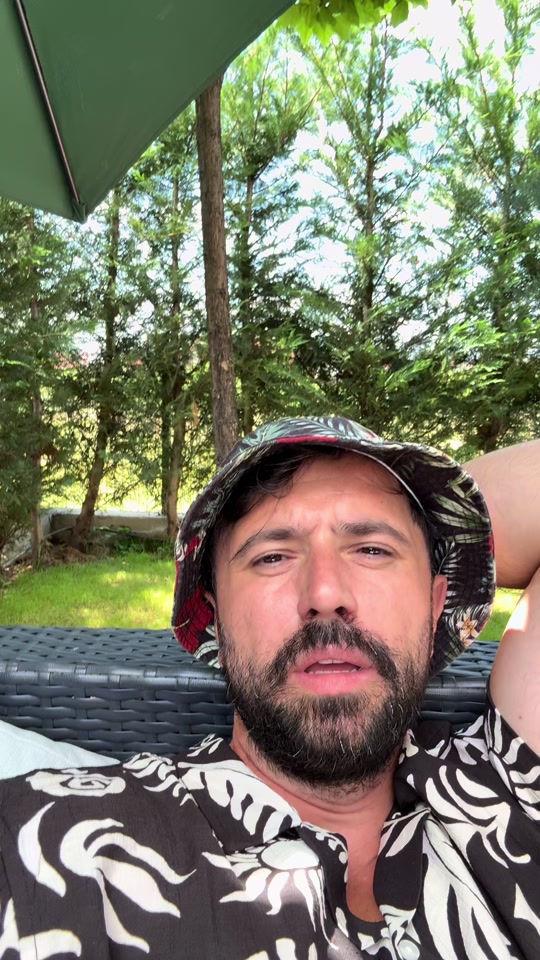
In this video I challenge the idea that staying closed off is always the same as healing. I speak about avoiding new experiences and never giving yourself a chance to meet the parts of life you have withdrawn from.
Then I connect that thought to death: a claim that the pineal gland releases DMT and produces a seven-minute review of your life.
Evidence clarification: the specific human seven-minute DMT life-review claim in the video is not established by the research cited below. A 2019 experiment measured DMT in rat brains, including after experimentally induced cardiac arrest. It did not measure a human life review or establish that timetable. [1]
The reflection about how to live and the scientific claim need to be considered separately.
What the study measured
The researchers reported an increase in extracellular DMT after cardiac arrest in rats, including animals whose pineal gland had been removed. The findings therefore do not establish the pineal gland as a necessary source for that observed increase. [1]
From there, a story about what a dying human experiences is another step entirely. A chemical measurement cannot tell us that someone relives every action, encounters a moral reckoning or reaches a final emotional resolution.
Those may be spiritual ideas someone wants to explore. They are not measurements in this experiment.

The useful question in the video
Leave the claim about the final minutes aside, and the question becomes immediate: am I waiting for life to change while avoiding every situation in which change could happen?
A person might recognise a conversation they have postponed, an apology they could offer, or an interest they stopped making room for. These are examples for reflection, not facts about everyone who is struggling.
The opening challenge in the video is deliberately strong. It should not become a judgement that another person is failing to heal. Staying away can also be a reasonable boundary. Someone does not owe access to a person who harmed them, and confronting a difficult experience does not have to happen alone or all at once.

A step you can choose
A useful response can be specific and small: write down what you want to say without sending it; decide which conversation is safe to have; ask a qualified professional for help if the subject feels overwhelming. There is no deadline here and no requirement to forgive or reconcile.
The point is agency. Choose a next step because it serves your life, not because an alarming account of death has pressured you into it.
I write about fear of death and living fully in another personal account. The spiritual questions matter to me. They remain stronger when a personal interpretation is clearly named as one.
There is already a life here that deserves attention.
Sources and calculation notes
-
[1] Dean and colleagues, Scientific Reports (2019): Biosynthesis and Extracellular Concentrations of DMT in Mammalian Brain. Animal findings do not establish a human DMT-driven life review. The article does not calculate a human duration or dose from the experiment.
-
The distinction diagrams are editorial explanations, not data plots. The medical clarification accompanies the original recording; it is not a claim that the recording itself included it.
-
Original video and thumbnail: Eduard Luta on TikTok. Published 2026-06-21. Research checked 26 September 2026.