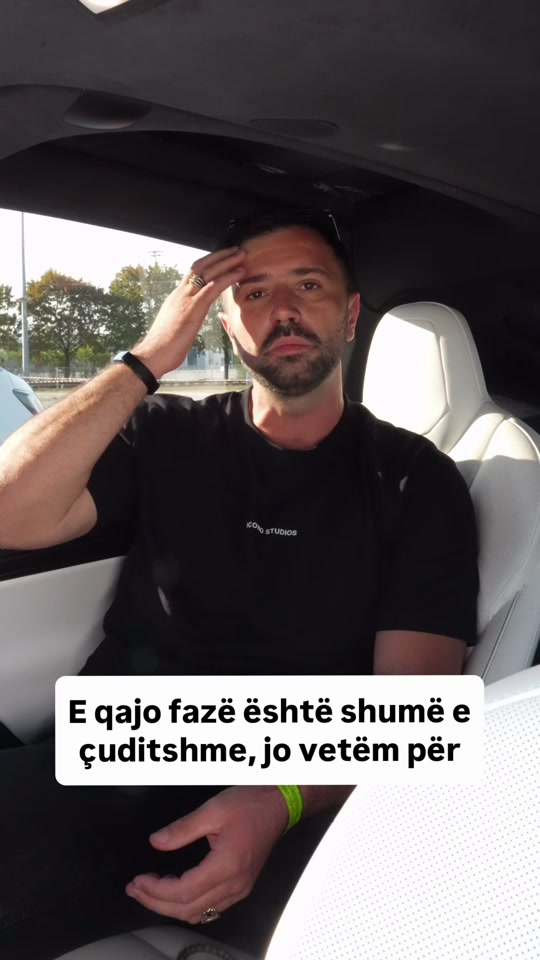
I am sitting in the car, trying to put words around something that refuses to become simple: a person you love is here, and then they are not.
In the video, I talk about how strange time becomes after a death. For you, it can move painfully slowly. Around you, it seems to move impossibly fast. People go to work. Families have their routines. Life continues while you are still trying to understand the new reality.
That mismatch is the centre of what I wanted to say. You can see the world moving and still have no idea where to put your next foot.
Continuing does not mean forgetting
There is a point in the clip where I push against the idea of forgetting. How could you simply erase somebody who mattered that much?
The way forward I am trying to describe is to carry the person with you while making room for life again. To create moments. To value what is still here. To imagine that living fully could honour a bond rather than cancel it.
That is a personal way of finding meaning. It is not an instruction to become cheerful, busy or productive before you are ready. Nor can I tell somebody else what the person they lost would have wanted.
Even a good day does not have to become a verdict on how much you loved them. And a difficult day does not erase the step you took yesterday.

Grief has no tidy timetable
The NHS guidance on bereavement makes an important distinction: grief does not have to follow every familiar “stage”, or follow them in order. Small, manageable steps and talking to someone can help. Seek professional support if you are struggling to cope or what you are trying is not helping.
In the clip, I speak urgently about facing the loss and returning to life. On the page, that needs room to breathe. Taking responsibility can include accepting help. Nobody else can live your grief for you, but that does not mean you must face it alone.
A useful question might be: what would make today a little more bearable? Not the whole year. Today. Perhaps there is one person you would feel able to sit beside, without having to perform being okay.
Grief and depression deserve different words
The caption mentions the pull of depression. That deserves care. Grief and depression are not interchangeable, although they can occur together. The American Psychiatric Association explains that grief can come in waves, including alongside positive memories; depression may involve more persistent low mood and loss of interest. A clinician can assess what is happening.
There is no willpower test here. Staying active is not a guaranteed treatment, and finding it hard to function is not a character failure. This reflection cannot diagnose anyone or replace professional care.
For someone in Germany who needs a person to talk to, TelefonSeelsorge offers free, anonymous support in German, day and night, on 116 123. Its website also links to support in other languages. If there is immediate danger, contact your local emergency service.
A place for both
The thought I keep returning to is this: remembering somebody and taking part in life can belong in the same day.
You do not have to settle the meaning of the loss before doing one ordinary thing. You do not have to stop missing someone before a new moment can matter.
That is the direction I am reaching for in the video. A way to keep the love, and still leave a little space for living.
Related reflection: happiness, expectations and gratitude.
Sources and calculation notes
-
NHS: grief, bereavement and loss, reviewed 14 July 2026; American Psychiatric Association: depression and grief. Clinical guidance is separated from the video’s personal perspective.
-
TelefonSeelsorge Germany: 116 123, free, anonymous, available around the clock; German-language service.
-
The visual is an editorial explanation, not a measured recovery curve or clinical model. No recovery deadline or guaranteed health outcome is asserted. Source record.
-
Original video and thumbnail: Eduard Luta on TikTok. Published 2026-10-02. Research checked 3 October 2026.