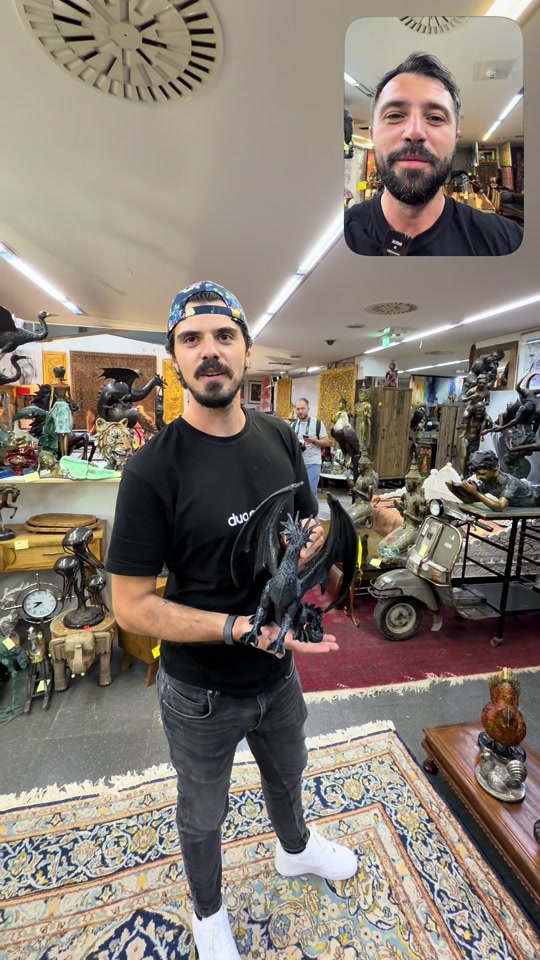
I went into a shop in Cologne looking for a dragon for Edon. Rugs, figures, objects everywhere—the kind of place where your eyes keep finding another thing before you have finished looking at the last one.
We found the dragon. Then I noticed this other character standing there, wearing something that immediately reminded me of a plis, the Albanian felt cap.
And suddenly the video had another question: have we found one of our people here too?
That is the joke behind the caption about Köln being full of surprises, and perhaps more Albanians than we think. A little figure in a shop is enough to send the mind home.
The dragon was the plan
In the clip, I like the dragon and say the price is good. Edon holds it while I film. There is no clear numerical price to turn into a comparison, and I am not going to invent one.
The other figure is what pulls the conversation off course. A small, unclothed male figure, with a beard and a cap. I invite people to look at him and join the joke. Would you swap the dragon for this fellow?
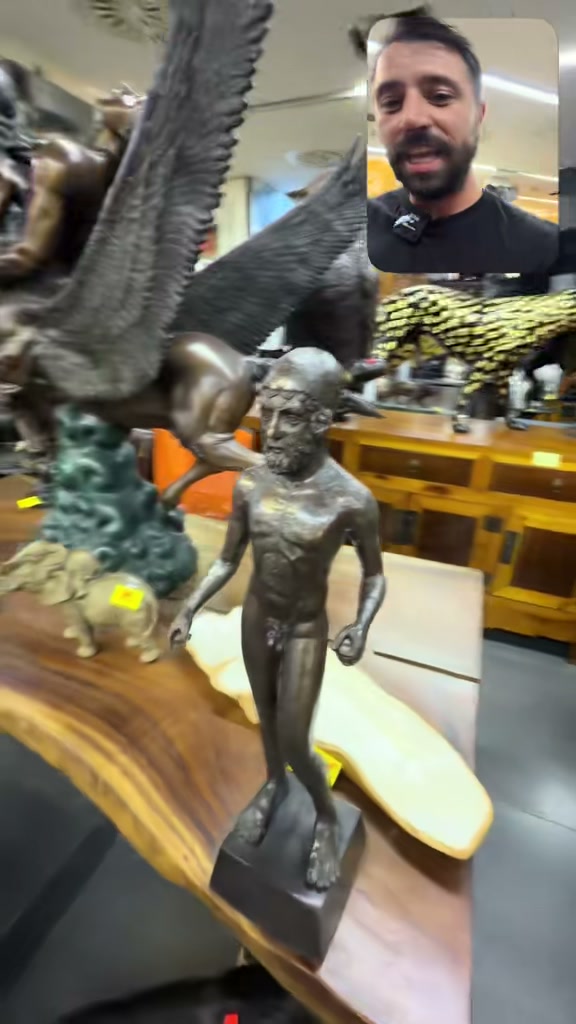
You can enjoy that resemblance without turning it into a claim about the object’s origin. I can tell you what caught my eye. The cap alone cannot tell us who made the figure or whom it represents.
A real felt cap, and a different museum comparison
There is a lovely concrete reference in the British Museum’s collection: a seamless, cream wool-felt cap bought in the market in Peja—listed as Peć in the catalogue—in 1960. The museum dates the cap itself to 1900–1960 and records its place of production as Kosovo with a question mark.
That distinction matters. A documented purchase location is one fact; the place where an object was made can still be uncertain.
For a different comparison, the Metropolitan Museum of Art has a Greek bronze helmet of the pilos type, dated to the fifth century BCE or later. Its catalogue explains that the helmet form derives from a similarly shaped felt cap used by herdsmen and other outdoor workers.
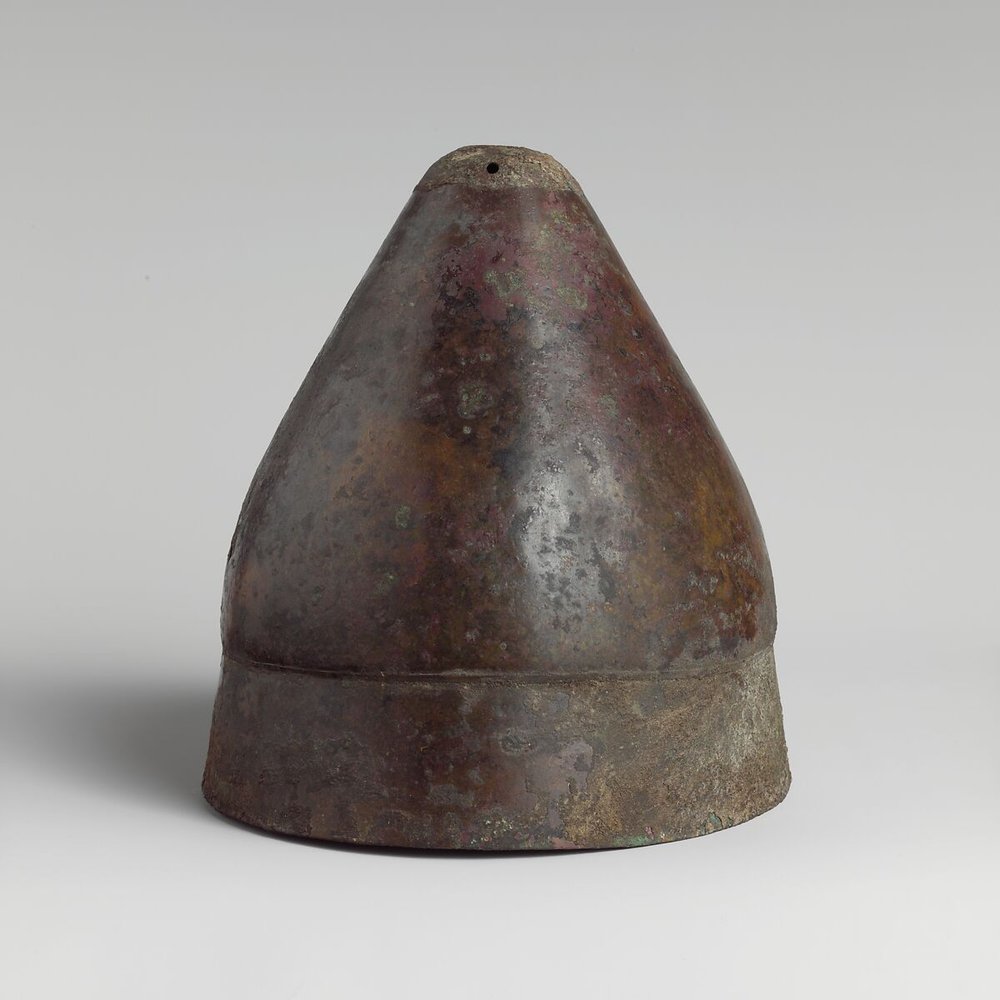
These examples do not establish a direct historical link to our shop figure. They show why a familiar outline is an invitation to investigate, not enough evidence to assign an identity. A felt cap, a bronze helmet and a cap represented on a decorative figure are different objects.
The resemblance can still make you smile.
How I would look a little closer
If I wanted to learn more about the figure, I would start with the object itself. ICOM’s Object ID documentation standard separates materials, identifying marks, date and maker. That is a useful way to slow down the story your brain has already written.

A photograph of the base, a readable label and an answer from the seller would be more useful than another confident guess from the cap. An old-looking warrior can be a recently made decoration. The subject’s imagined age and the object’s actual age are separate questions.
I do not have verified answers for this particular figure, or a confirmed shop name and address. What I do have is the moment: looking for a dragon, spotting a familiar shape, pulling everyone into the conversation.
That belongs with what I keep saying about making more room for play. You do not need every detour to become a serious mission. Sometimes curiosity gives an ordinary walk its whole story.
We went looking for a dragon. For a moment, we found a little piece of home in the shape of a hat.
Sources and calculation notes
-
Video: caption, original audio and visual sequence reviewed. The shop, figure’s maker, material, age and price are not verified. The resemblance to a plis is a personal observation, not an attribution.
-
Museum references: British Museum, Eu2004,03.10; The Met, 08.2.4. Dates and qualified origins follow the catalogues. The Met image is Public Domain; neither museum identifies the figure in the video.
-
Looking guide: adapted from selected ICOM Object ID categories, not a complete documentation form. No price calculation is possible from the verified clip. Evidence and image credits.
-
Original video and thumbnail: Eduard Luta on TikTok. Published 2026-09-28. Research checked 29 September 2026.