A day I will never forget, I can’t forget. Is it the end or the start? If yes of what?
09.11.2025 — Sitting in a mountain cottage, I had just finished reading the Simulation Hypothesis Paper from Nick Bostrom, and was contemplating how to approach my mother to convince her to take a mushroom trip together with her three boys.
Not only because she was sick with cancer and fighting for her life, but also because she told me that her happiest moment in life was when I was born on the 10th November 1989. And I wanted now to gift her with the most beautiful day of her life, 36 years after. Just when I was setting up the talk, a phone call from my father: my uncle (her brother) just died. Reality folded into origami patterns I’m still trying to unfold.
The Precision of Loss
My grandmother (mother of my father) departed this reality on 11.11.2014 — eleven years ago, one day after my birthday. On the 09.11.2025 my uncle followed her — one day before my birthday. Eleven years apart, these deaths frame my birth like parentheses, creating a temporal symmetry that random chance struggles to explain. 9-death, 10-life, 11-death….
Another pattern framing this day is not on my side, but on my mother’s. She too is getting parentheses around her own: my mother missed her goodbye with her mother by exactly one day twelve years ago. Today, she is one day too late for her brother, my uncle. This pattern of near-misses feels authored rather than accidental — as if loss itself follows a hidden algorithm, just like my birthday is surrounded by death.
I’m writing this a few days after these events, trying to make sense of patterns that seemed impossible in the moment.
The Messenger
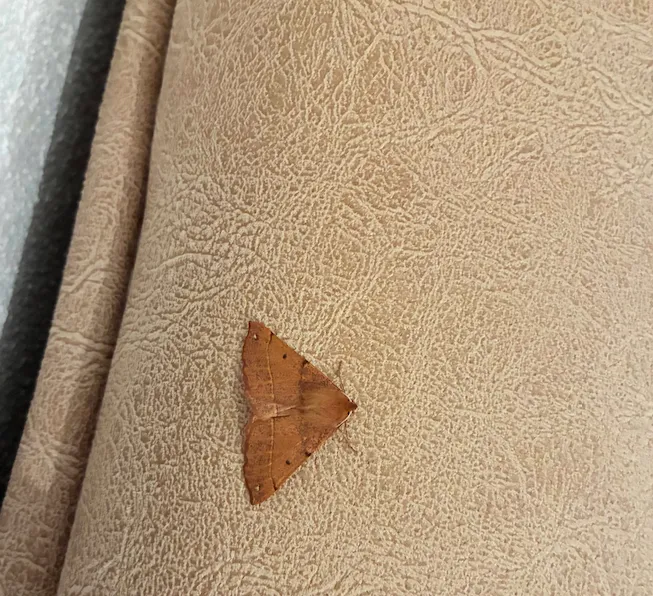
As I stood near my uncle’s body, a butterfly appeared — or what I thought was a butterfly. It hovered above him with deliberate grace, marking the moment of transition. Later, as I write these words on my phone, as I need to create an output of this complex situation and this orgasm of mind and soul, the same creature returns, surrounding me. Upon closer inspection, it’s a moth — that navigator of darkness, drawn to light sources we cannot see.
The distinction matters. Butterflies transform in daylight; moths navigate by moon and stars. One seeks the light; the other finds its way through darkness . Today, in my grief, I needed the moth’s wisdom more than the butterfly’s beauty.
The Cancelled Ceremony
We had prepared and set everything up to introduce my mother to expanded consciousness through a mushroom ceremony — to show her what we call “the other part of reality.” The phone rang just as we were about to discuss it with her. Her brother had died. The ceremony was cancelled, but perhaps a different initiation began.
Instead of psilocybin revealing hidden dimensions, death itself became the teacher. Instead of chemically induced insight, synchronicity provided the expansion and the healing needed: Reality didn’t need our ceremony; it had its own planned. We really thought we had a better plan for her :)
When Simulation Theory Becomes Personal
Bostrom’s paper argues through logic and probability that we’re statistically more likely to be in a simulation than not. But his equations didn’t prepare me for this: the vivid experience of reality responding to my investigation of its nature.
The closer I examine the possibility that reality is computed, the more reality seems to comment on my examination. It’s as if the simulation doesn’t hide from those who seek it but instead reveals itself through impossibly precise synchronicities — not as proof but as acknowledgment.
The simulation doesn’t prove itself through argument. It reveals itself through the impossible alignment of events that make us question the nature of “impossible” itself.
Or that’s what I thought in that moment. Today, a few days later, it seems that the chaos had more precision and order than I could ever imagine.
The Language of Patterns
These numerical coordinates — 11.11 and 9.11 — create a framework around my existence. The moth that I mistook for a butterfly. The cancelled ceremony replaced by death’s teaching.
Jung called it synchronicity — meaningful coincidence without causal connection. But what if there is a connection, just not one visible from within the matrix? What if these patterns are the syntax of simulated reality, the moments where the code transforms into experience?
Today, reading about simulation theory while experiencing these synchronicities, I understand that the question isn’t “Are we in a simulation?” but rather “How does the simulation communicate with those who begin to see it?” And are you brave enough to believe in what you see?
I believe there is a God, with as much conviction that this is a simulation.
The Teaching
We wanted to show my mother the other part of reality through ceremony. Instead, reality showed all of us its hidden architecture through loss, through pattern, through creatures of transformation appearing at the exact moment of transition. The teaching arrived, just not in the form we expected.
She needed something different than what we planned. By missing her chance to say goodbye — repeating the pattern from her mother’s death — she was forced this time to truly enter her grief. Through this suffering, she came to understand her brother’s final wish: to die at home, unseen in his last moments.
His free will, not her need for closure. While the pattern repeats, she learns to accept his last wish rather than relive the missing. The pattern repeated so she could finally release it.
Perhaps this is the deepest lesson: the other part of reality isn’t accessed only through substances or meditation or theory. It reveals itself in moments when the ordinary becomes transparent, when patterns become undeniable, when moths circle between the living and dead.
The Moth’s Wisdom
This moth circling around me — navigator of darkness, carries different wisdom than a butterfly. It doesn’t promise resurrection into beauty. It promises that even in darkness, there is navigation. Even in grief, there is geometry. Even in loss, there are patterns that suggest design.
Believe me or not, in that moment, everything made sense, as you are in a trance between here and there and the portal of death is a weird place to be around.
The simulation speaks not in words but in timing. Not in proofs but in patterns. Not in answers but in synchronicities that accumulate until coincidence becomes impossible to maintain.
Today I learned that when you truly begin to see the simulation, it begins to see you back. And sometimes, it sends a moth to keep you company while you write about it, as if to say: Yes. Keep looking. You’re beginning to understand.
The moth remains as I finish writing. Proof that transformation doesn’t always happen in daylight — sometimes it happens in the spaces between Death-Life-Death, in the moment when death arrives instead of ceremony.
This is how the simulation speaks to those who listen: through the language of synchronicity, through the mathematics of grief, through moths that refuse to leave.
— — — — —
The next day, I wake up and have forgotten completely about my birthday. When I remembered, it led to the thought that I was in the wrong reality.
Actually I then understood there is no other reality than where I am, so I better accept it. Soon the day became more interesting, I began to understand what I saw (or at least connect a dot here and there) and see the beauty in all of this. I just made sure that I finished the day with my family at home.
One thing I take with me from all these intense times: When death is around, it purifies everything. The fire around the portal out of this simulation purifies every string, every false illusion and lie to everyone brave enough to look at it, doubt it, or touch it by holding on to the dead. I saw a beauty in death I still do not understand.
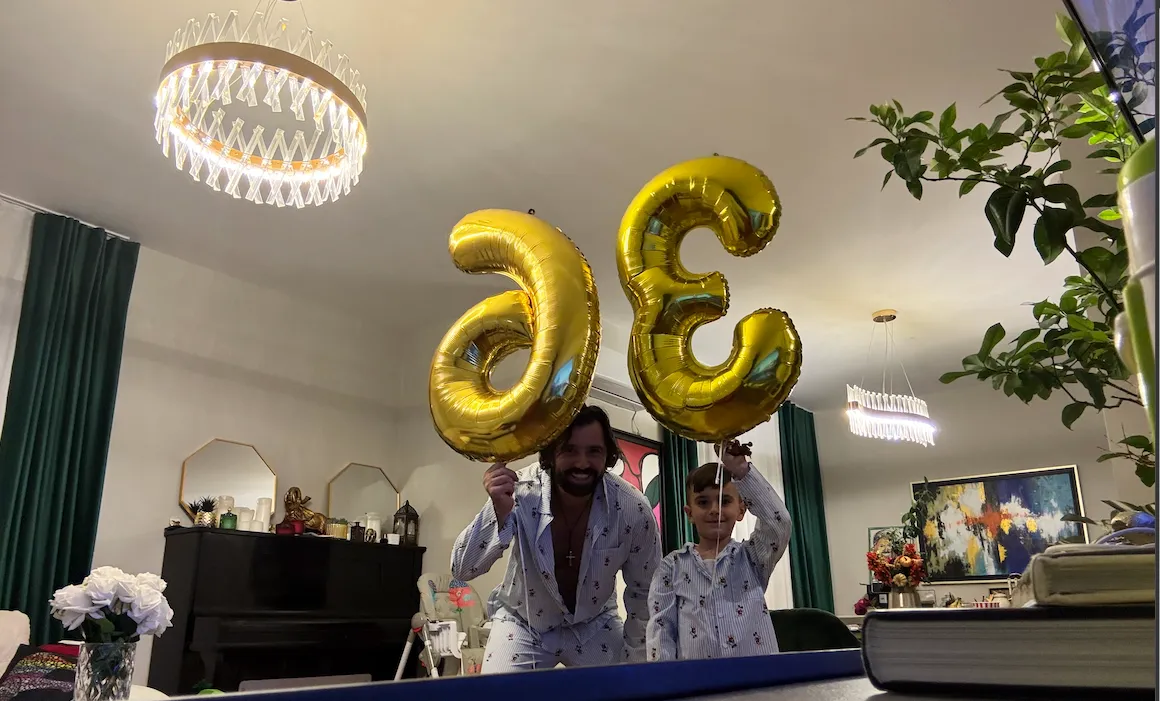
While finishing this article and dancing with my little boy, I think about the portal of death — that mysterious threshold where Fear, Fire, Truth, and Simulation collide. I’m so near to understanding, yet so far.
A little dance more…