I never planned to write something this profound, let alone begin what might become a series. It started simply: I wanted to understand the connection between Ivermectin, Fenbendazole, and parasites— especially parasites — because my mother is fighting cancer.
During my Ayahuasca ceremony earlier this year, we collectively saw that what needed healing wasn’t just the body, but the parasites — physical and energetic — living within and feeding from us. That moment cracked something open in my mind; an inception that hasn’t left me since. It keeps calling me back.
The deeper I went down the rabbit hole, the stranger it became. The more context I sought to understand how everything connected, the clearer it became where this was all leading. So here I am — documenting, writing, and sharing what I’ve learned and what I’ve connected.
What are Parasites:
Parasites are the biological malware of existence. The parasite appears as the Devil’s most sophisticated shadow agent. It doesn’t kill — it eats from the inside, turning the host into its own weapon. It’s the inversion of life, the corruption of code, the system consuming itself. The parasite is the antidote to life — the dark cure that ends what it cannot control.
Once this image takes root, we can descend to the pragmatic: parasites are organisms that live on or within a host, drawing nutrients at the host’s expense. They’ve evolved to evade immune systems, manipulate behavior, and survive for decades within a single host.
They eat your food, drain your energy, multiply endlessly. But here’s what’s truly terrifying — over time, they shape your thoughts, emotions, and behavior. The longer they remain, the more parasitic you become. The host mirrors the invader.
The malarial parasite alone has killed more people throughout history than all wars combined.
What kind of parasites exist?
Scientists classify human parasites into three main groups.
Together, they make up roughly 320 known species that infect humans — from microscopic invaders to worms that can grow several meters long.
1. Helminths — The Worms
These are the larger, multicellular parasites that live and feed inside the human body, especially in the intestines. They account for most of the known parasite species.
These worms don’t just visit — they move in for decades. Tapeworms can live 30 years in your gut, growing up to 9 meters long. Liver flukes can survive 40+ years. You could be hosting the same worm from childhood to middle age, never knowing it’s there.
Think about that. A 9-meter parasite — that’s the length of two cars — coiled inside your intestines for three decades. Feeding. Growing. Reproducing. Releasing millions of eggs. Shaping your cravings, your mood, your decisions for your entire adult life.
This isn’t a temporary infection you fight off like a cold. This is a lifetime roommate you never agreed to host.
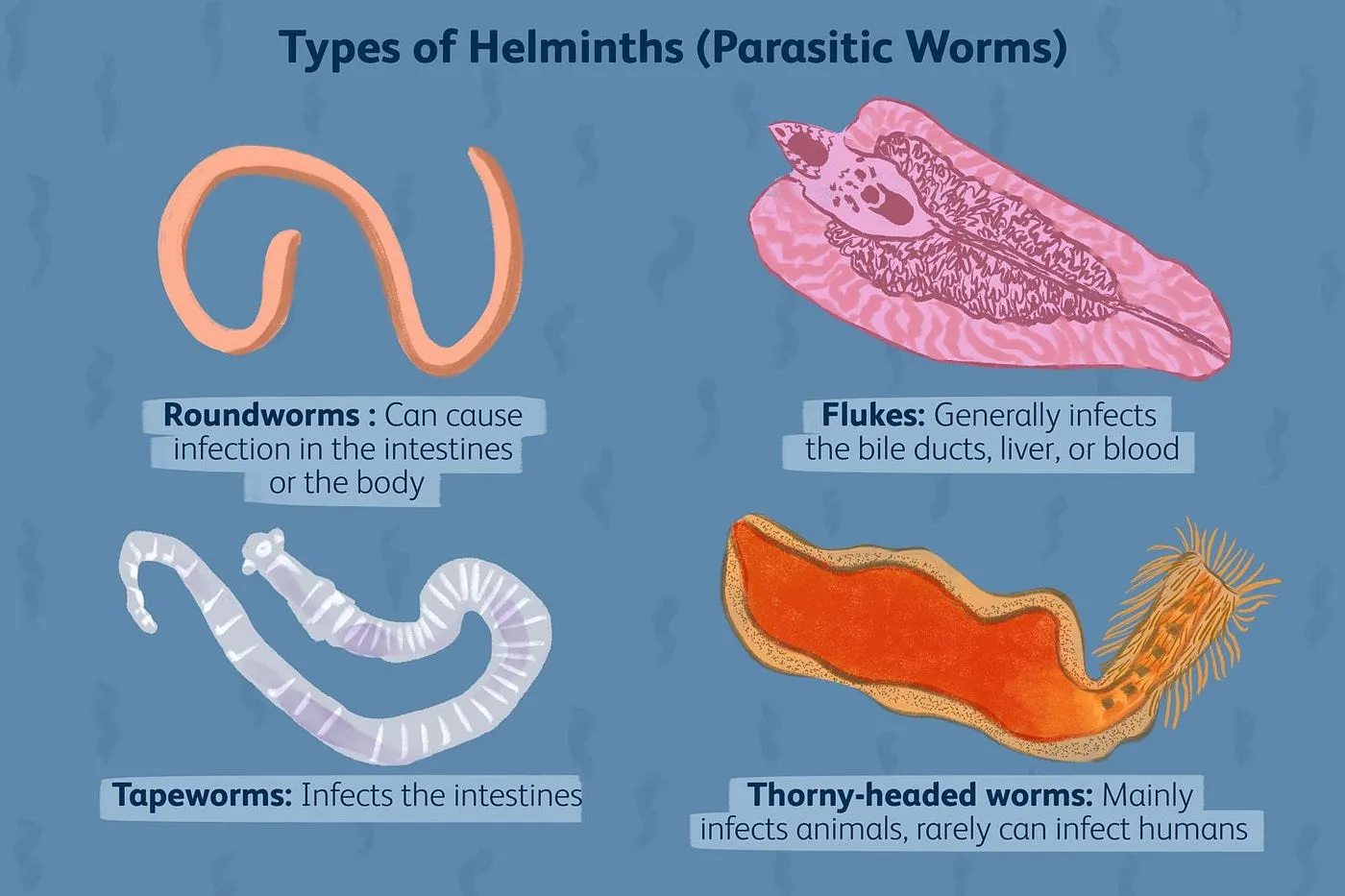
Type of Helminths (Parasitic Worms)
- Nematodes (roundworms): Including Ascaris, which infects 1 billion people worldwide
- Cestodes (tapeworms): Can grow up to 9 meter long in your intestines
- Trematodes (flukes): Flat worms that burrow into your liver, lungs, or blood
- Acanthocephalans (thorny-headed worms): Named for their hooked proboscis that literally anchors into your intestinal wall like a biological grappling hook — particularly common in Eastern Europe and areas where people eat raw fish
Together, these groups make up around 250 of the 320 known species that infect humans. The helminths are the most common — not as deadly as protozoa, but they drain vitality, stunt growth, and weaken immune systems on a planetary scale.
2. Protozoa — The Microscopic Invaders
Protozoa are single-celled organisms so small they can only be seen under a microscope. Don’t let their size fool you — they’re among the deadliest parasites known to humankind.
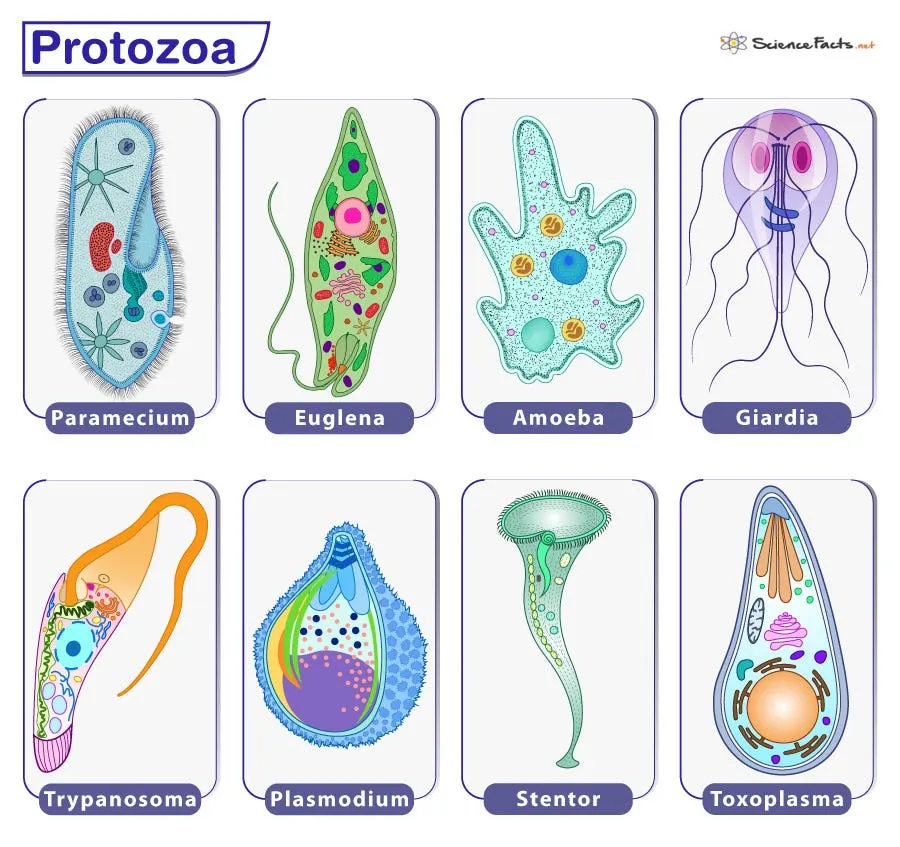
- Giardia lamblia: Turns your intestines into a war zone, causing severe digestive chaos.
- Toxoplasma gondii: Infects 30–50% of the global population and has been shown to alter behavior and risk perception.
- Plasmodium (Malaria): The most lethal of all — responsible for more human deaths than any war in history.
These account for roughly 70–90 of the known species, though their global reach and mutation rate make them disproportionately dangerous. The protozoa are the most lethal. They’re small, adaptable, and capable of hijacking both biology and behavior.
Don’t let their size fool you…
These don’t come as single invaders — they multiply into millions. Giardia coats your intestinal walls like a living carpet. Toxoplasma forms permanent cysts in your brain and muscles. During malaria, billions of parasites explode through your bloodstream — each infected cell bursting to release 20 more every 48 hours.
In severe malaria, up to 10% of your red blood cells are parasitized. That’s 500 billion infected cells. This is why malaria has killed more humans than any war.
While worms live for decades, protozoa reproduce exponentially. A tapeworm might live 30 years, but Giardia generates millions of offspring in 30 days. And Toxoplasma? Once it cysts in your brain, it’s there for life.
These aren’t infections. They’re invasions.
3. Ectoparasites — The Vampires of the Outer World
These live on the body rather than inside it, feeding on blood and skin while transmitting other diseases.
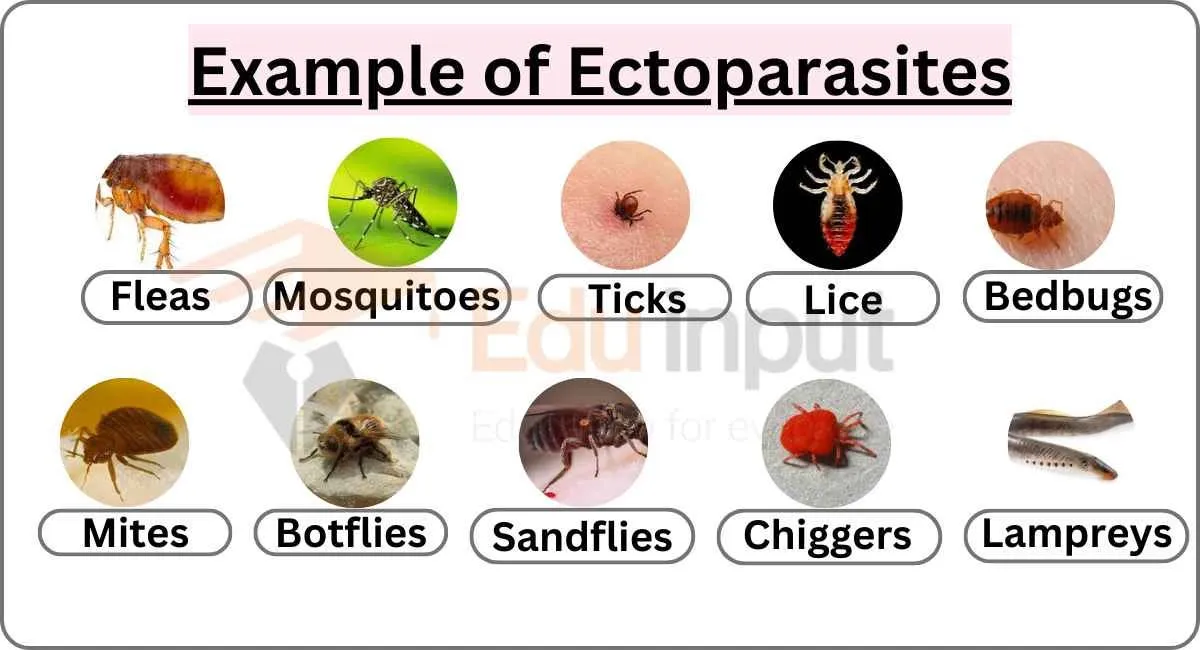
- Lice, mites, and ticks: Far more than a nuisance — they are carriers of serious infections.
- Scabies: Caused by microscopic mites that burrow beneath the skin, triggering intense itching and inflammation.
This final group includes around 20–30 species that directly parasitize humans — but their role as vectors (transmitters) multiplies their overall impact.
But here’s the real horror: ectoparasites are vectors. They’re not just feeding on you — they’re injecting you with whatever they picked up from their last host. Each bite is a potential infection. Each itch could be the beginning of something worse.
In the Balkans, where animals graze freely and hygiene is variable, these external parasites create bridges between animal and human infection. The tick that bit the parasitic cow yesterday is biting your child today.
A Parasite Alone Is No Parasite
The combination creates power. Parasites don’t just multiply — they diversify, inviting new species into the host body. Once the first finds a home, it changes the terrain, weakening defenses and building the perfect environment for others to join.
Each new arrival feeds on the weakness left behind by the others. Some consume nutrients. Others feed on inflammation. Together they create a hidden ecosystem — a network of decay that slowly takes over from the inside.
At first, you might not notice. A little fatigue. A foggy mind. Strange cravings. But as the balance shifts, your body starts working for them instead of you. The longer they stay, the more they shape how you feel, think, and act — until the host begins to mirror the invaders.
The Combinatorial Nightmare
A parasite alone is no parasite — because the combination is what creates the real pathology. The network effect. The cascading terrain shift.
Mathematically, 320 species can create ~2.1 × 10⁹⁶ possible combinations.
To put that in perspective: that’s more combinations than there are atoms in the observable universe (10⁸⁰).
But reality narrows the field. Some parasites compete for the same resources and can’t coexist. Others create environments that favor specific companions — symbiotic cascades that invite more invasion. And geography matters: you won’t get both tropical and arctic parasites in the same host.
Even with these constraints, we’re still looking at billions of possible combinations — each one creating a unique internal ecosystem with different symptoms, behaviors, and health impacts.
This is why two people with “parasites” can feel completely different.
One might be anxious and foggy. Another depressed and inflamed. A third might feel aggressive, paranoid, or strangely compulsive. Same word — “parasites” — but entirely different realities.
How We Get Them
This is the part that connected everything for me.
I was sitting in the car with my brothers, reading the Fenbendazole package I’d just bought from a veterinary clinic. Goat and sheep printed on the side — this medicine wasn’t meant for humans.
The instructions said: After treating animals, you cannot use the milk for 6 days or the meat for 21 days.
That’s when everything clicked. The dominoes fell.
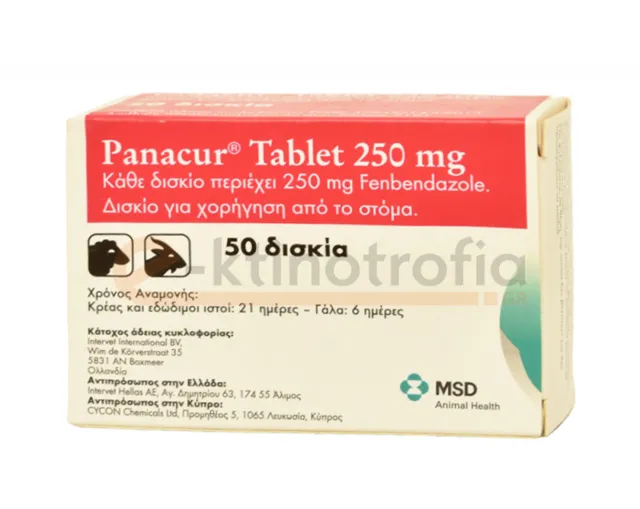
Panacur 250mg
The Economics of Infection
If animals — especially cows — have parasites, you’re supposed to treat them before slaughter. That means you invest money in the drugs, wait through the treatment period, and can’t sell the milk or meat during that time. Cost on drugs. Cost on no output.
Now in poor countries like the Balkans, where I live, I guarantee that most farmers don’t know this. Second, they don’t abide by the rules. Third, they can’t afford it.
Let me give you the numbers that will blow your mind.
Studies from Romania (our neighbor) found that 86% of cows have parasites. That’s almost 9 out of 10 cows. In the Western Balkans — Albania, Bosnia, Croatia, Montenegro, North Macedonia, Serbia — the data is even worse because nobody is properly tracking it. Scientists say the real number is probably between 70–90% of all cows having some kind of parasite at any given time.
Think about it. If you eat meat 100 times a year, statistically you’re eating parasitic meat 80–90 times. And this is just the average. In poor farms with no deworming, no proper pasture management, no tick control — it’s basically 100%.
The crazy part? All grazing animals get parasites in their lifetime. It’s guaranteed. The only question is how bad and how many. And when you don’t treat them before slaughter — because you can’t afford the 21-day waiting period — guess where those parasites end up?
In your stomach.
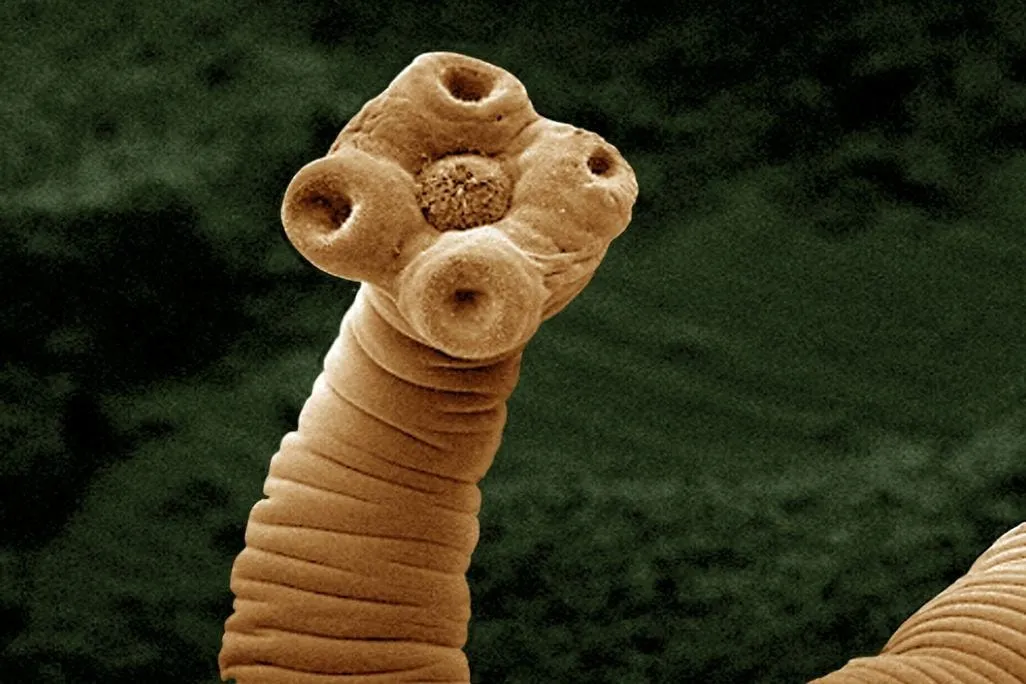
Tapeworms, like this one imaged using a scanning electron micrograph, weaken their victims but don’t typically kill them.
Not Dead in the Stomach
“But wait,” you might say, “we cook the meat. Doesn’t that kill the parasites?”
Sure — if the internal temperature hits 71°C throughout. But think about how Balkans actually eat meat: ćevapi, pljeskavica, medium-rare steaks with blood still pooling on the plate. Hot on the outside, raw in the middle.
The parasites don’t die on the grill. They survive in that juicy center. The culture is speed, fire, and rare meat. Who’s checking temperatures? Who’s waiting?
GG.
The Diagnostic Trap
This is where the medical system completely breaks down.
They’re looking for the parasite. But there is no the parasite— there are billions of possible ecosystems, each creating its own frequency of decay.
Western medicine tests for individual species: Giardia, pinworms, a specific fluke. They’re not seeing the network. You test negative for the one thing they checked — they tell you you’re fine.
Meanwhile, you’re hosting 7 different species they never looked for, creating a combination that’s never been studied, producing symptoms that don’t match any textbook.
The combination determines everything.
Toxoplasma + Ascaris = anxious and tired.
Add Giardia + liver flukes = aggressive and depressed.
Same parasites, different combinations, different symphonies.
This is why “chronic fatigue” has different root causes in different people. Why treatments work for one but not another. Why symptoms shift as the ecosystem evolves. The medical system is looking for singular causes in a multi-dimensional problem.
A parasite alone is no parasite. The power is in the network effect that rewrites your biology from the inside out.
This isn’t just about parasites — it’s about how complexity creates invisibility, and how medicine is blind to anything it can’t isolate and name.
The Human Numbers Nobody Talks About
Here’s what no one tells you: between 30–70% of adults in the Balkans could be carrying parasites right now. Most have no idea. The range is so wide because nobody’s really counting — and that’s not an accident.
There are four reasons governments here pretend this doesn’t exist.
First: Parasites don’t cause dramatic outbreaks like COVID or cholera. They’re invisible killers — slow, steady, and politically useless. No headlines. No panic. No votes.
Second: Testing is expensive and often unreliable. Why fund research that only exposes a problem you can’t afford to fix?
Third: Medical schools still teach that parasites are “tropical diseases” — as if Europe is somehow immune, as if we don’t have our own strain of poverty-born parasites right here.
Fourth: Public awareness is near zero. People only get tested when they’re shitting blood or passing worms. Everything else gets blamed on “stress,” “genes,” or “bad luck.”
The lack of data isn’t proof of low infection — it’s proof of willful blindness. Because once you look, you have to act. And acting costs money these governments don’t have — or don’t want to spend.
Why Don’t People Feel It?
“But wait,” you might say, “if 70% of people have parasites, why isn’t everyone sick?”
Because these are subclinical infections — your body learns to coexist with the invaders. Like a dysfunctional relationship where you forget what normal feels like. The symptoms get renamed:
- Chronic fatigue becomes “just how I am”
- Digestive issues become “sensitive stomach”
- Brain fog becomes “not a morning person”
- Anxiety becomes “that’s just life in the Balkans”
The parasites don’t want to kill you — they want to ride you. They take just enough to survive while keeping you functional enough to feed them. You adapt to feeling like that and call it normal.
And it starts in childhood.
Children get infected early — often before they can even remember what it felt like to be clear. They eat the same meat. They play in the same soil. They drink from the same water sources. By age 5 or 6, many already carry multiple species.
But here’s the nightmare: if you get infected as a child, you never know any different. The brain fog, the irritability, the difficulty concentrating, the unexplained stomach issues — that becomes your baseline. You grow up thinking this is just how I am.
The parasites shape your developing brain, your personality, your tolerance for discomfort. You adapt to them so early that the adaptation becomes your identity. And when everyone around you is in the same state, there’s no reference point. No one to tell you that constant fatigue at age 8 isn’t normal. That anxiety and aggression in teenagers might not be “just hormones.”
An entire generation raised on parasitic meat, raised by parasitic parents, growing up in a parasitic culture — and nobody questions it because nobody remembers anything else.
The Cycle Completes
What you eat, you become. Do this a couple hundred times (the Balkans eat the most red meat per capita in Europe), add Helicobacter, add sanitary issues — then add the radioactive soil from the wars, the chemical runoff from abandoned factories, the pesticides nobody regulates. The parasites aren’t just thriving — they’re mutating in toxic terrain. You get the full spectrum of biological and chemical damage.
Now you understand how an entire region gets infected. How they think, how they act, why they can never evolve further.
They’ve become parasites themselves — amplifying each other, hunting every healthy person that arrives. Someone comes with clean energy, clear thinking, no parasites — they swarm them like zombies. Through toxic mindsets, through contaminated food, through soul-crushing bureaucracy, they drag the healthy down to their level. The light gets dimmed. The clean become infected.
You have to fight for your life against these parasites or you become one of them. Which is what happens to most.
That’s why people run away from this place. They don’t know why exactly, but they know. Everyone has a different explanation, but it’s the same thing: the fucked up way of thinking, doing, and being in this place.
Spiritual Possession
Spiritually seen, parasites are demons.
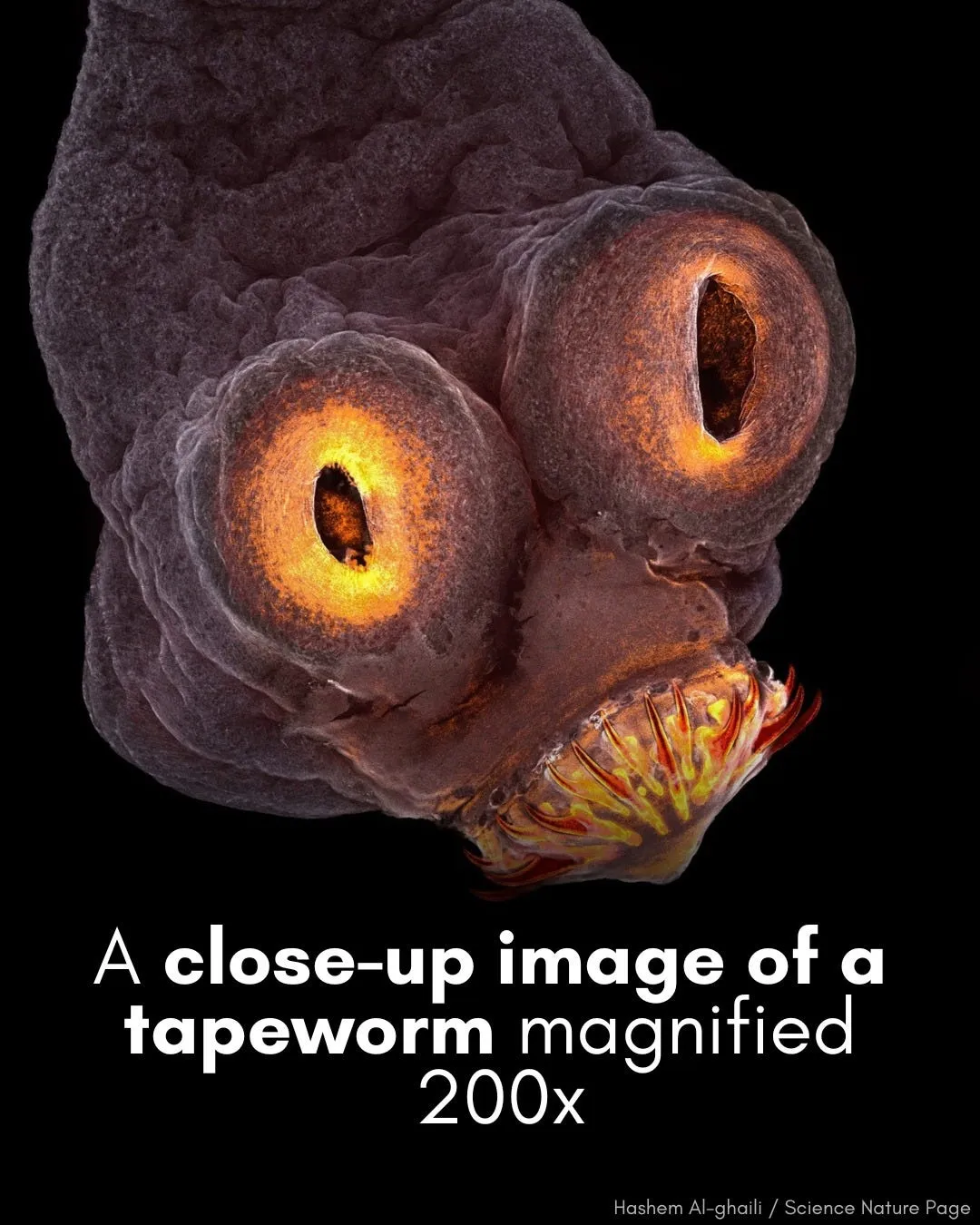
Tapeword x200
Think about what demons do — possess you, feed on your energy, make you act against your own interest. They enter through weakness, change you from within, make you crave what harms you, turn you into a vehicle for spreading their influence.
Parasites do exactly this. They enter through contaminated meat, manipulate your cravings (ever wonder why you crave the sugar and carbs that feed them?), release toxins that affect your brain, mood, decisions.
Studies show they change personality, increase anxiety, decrease cognition. They literally possess your biological system.
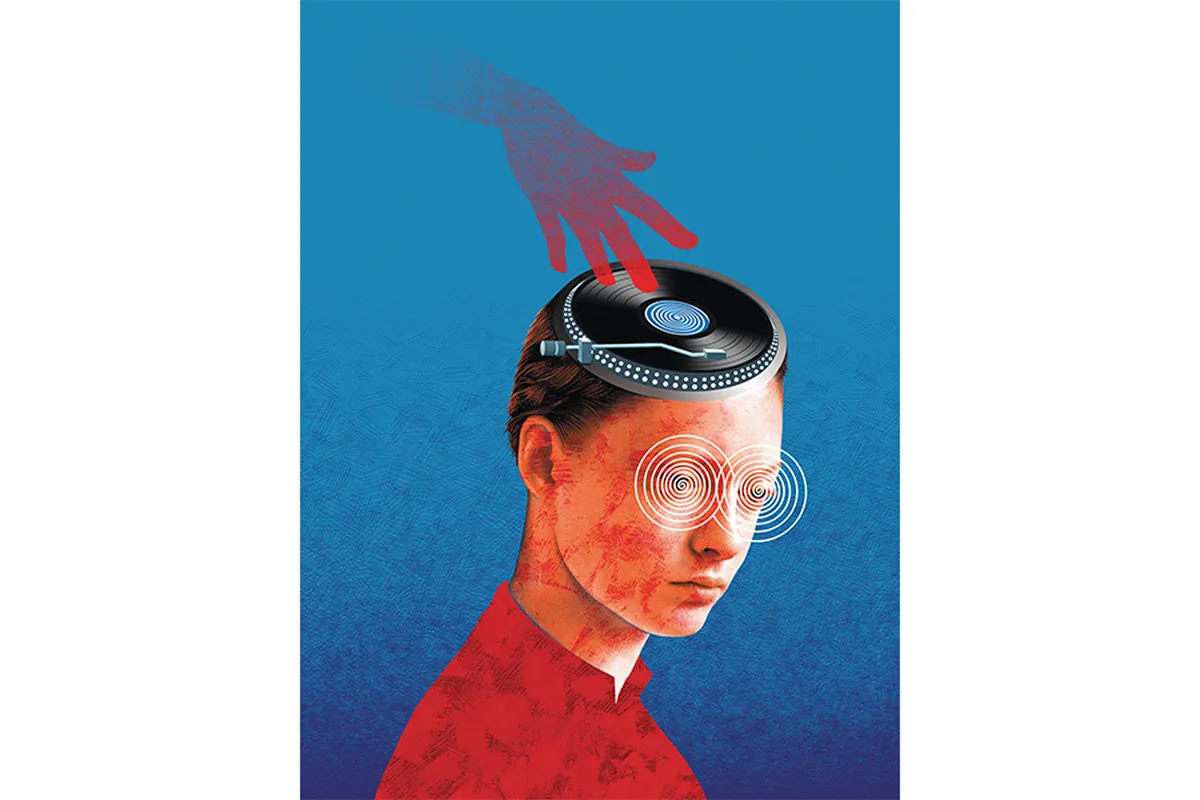
In the Balkans, where 80–90% carry parasites, you have an entire possessed population. And what do the possessed do? They create systems that perpetuate possession. They don’t treat animals. They mock those who cleanse. The parasites have won — they’ve created a culture that ensures their survival.
The implication is terrifying and liberating.
Terrifying because we’re not dealing with bad habits — we’re dealing with biological and spiritual possession that self-perpetuates.
Liberating because now you know what you’re fighting. You’re not crazy for feeling something is fundamentally wrong. You’re surrounded by the possessed, and they will try to possess you too.That’s why deworming isn’t just health — it’s spiritual liberation. When you kill parasites, you’re performing an exorcism.
When you refuse contaminated meat, you’re refusing demons entry. When you leave this place, you’re fleeing possession.
Maybe that’s why fenbendazole helps with cancer too. Cancer is just another possession — cells that forgot who they are, turned parasitic. The physical and spiritual are not separate. What happens in your gut happens in your soul.
The demons are real. They’re just smaller than we thought.
The Behavior Mirror
When you understand that most of the Balkans is infected with biological parasites, our social parasitism makes perfect sense. We don’t just have parasites — we’ve become them.
Look at how business works here: Everyone extracting maximum value while contributing minimum effort. Government officials bleeding the system. Employers paying survival wages while demanding loyalty. Friends who only call when they need something. The guy who borrows knowing he’ll never pay back.
This isn’t “Balkan mentality” — it’s parasitic behavior modeled after our microscopic masters. The parasites teach us how to survive by taking, how to spread by making the healthy weak.
A 70% infection rate means 70% are receiving daily biological instructions on how to be parasitic. Their bodies are universities for exploitation, and the lessons seep into consciousness. You become what hosts you.
The infected create systems that protect infection. They mock the clean: “Why you taking those pills, you think you’re better than us?”
They sabotage the healthy: “Come on, one drink won’t hurt.” They create bureaucracies that exhaust the productive until they too become parasitic just to survive.
That’s why talented people flee. Not for “economic opportunity” — plenty of poor countries keep their talent. They flee because they instinctively know: This is an infected zone. Stay too long and you either die fighting or become a parasite yourself.
The physical parasites create psychological parasites create social parasites create institutional parasites. The worm in your gut has a cousin in your government office.
Deworming isn’t just medicine. It’s revolution.
— —
11.11.2025 — Prishtinë
To be continued PART 2