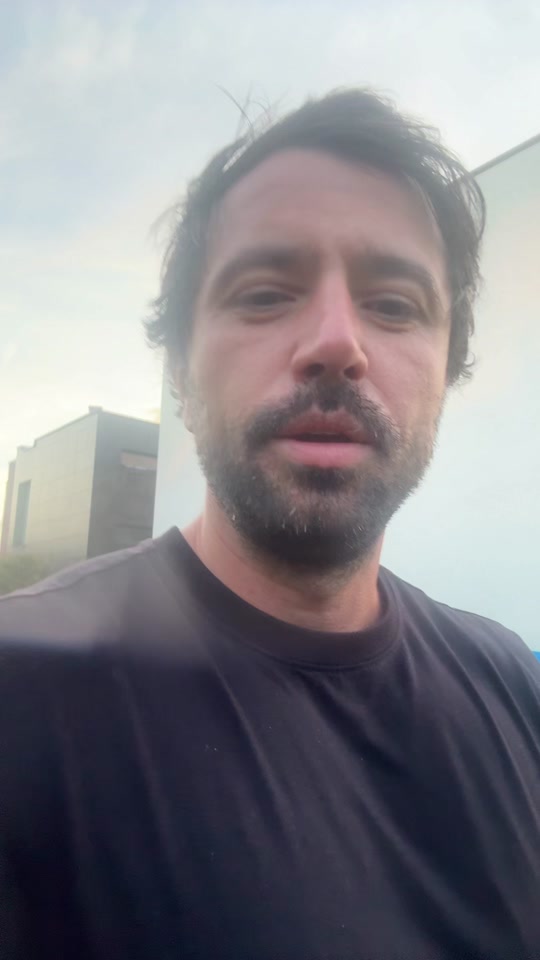
When I was younger, I liked the idea of having a visible talent. Being an artist. Being a footballer. Being the person who could simply do the thing that made everyone look.
In the video I turn that thought around. What does a talent become if you never use it? A painter who never paints has no painting to show. A musician still has to make music. The ability needs somewhere to go.
I describe my willingness to work, solve problems, talk to people and face challenges as something I can build a life around. That is the centre of the video: finding value in doing, instead of waiting to discover that you are special.
Keep the work; question the hours
The recording also mentions spending fifteen hours in the office. That is a personal description, not a useful daily target for readers.
WHO and ILO research links long working weeks with increased cardiovascular risks. It is a reason to take working time seriously, not to turn exhaustion into evidence of commitment. [1]
The repeatable session matters more than the heroic story about the session.
No amount of time automatically becomes skill. Attention, feedback, access to tools and the kind of practice all matter to what you can actually make. Counting minutes is useful for planning; it cannot tell you who has more talent.

What a modest week can contain
Here is an illustrative schedule, not my measured routine: four sessions of 25 minutes give 100 minutes a week. Five sessions of 15 minutes give 75 minutes. The difference is 25 minutes; the first plan contains one-third more scheduled time than the second.
Over four weeks, with every session completed, that is 400 minutes versus 300 minutes. Nothing in this calculation predicts mastery, income or the quality of the result. It simply turns an intention into time you can recognise in a calendar.

Choose the plan that fits, or make a smaller one. A missed session is information about the plan. It does not decide whether you are a writer, artist or person worth taking seriously.
Leave something you can return to
A practical session has a visible object: a sketch, a paragraph, a recorded passage, a solved problem. At the end, write down the next thing to try. That gives the following session a place to begin.
This is the connection with trying and visible progress. The claim becomes easier to understand when something has changed outside your head.
And the work needs to belong to a life. Sleep, family and time away are not failures to honour your talent. They are part of the conditions in which you hope to keep using it.
Make something small enough to begin, and meaningful enough to return to.
Sources and calculation notes
-
[1] WHO and ILO: Long working hours and health, 17 May 2021. Population research; no personal risk is calculated here.
-
Illustrative arithmetic: 4 × 25 = 100; 5 × 15 = 75; difference = 25 minutes; 25 ÷ 75 × 100 = 33⅓% more time. Four-week totals: 400 and 300 minutes. Reproducible inputs. These are planned minutes, not productivity scores.
-
Original video and thumbnail: Eduard Luta on TikTok. Published 2026-05-30. Research checked 26 September 2026.