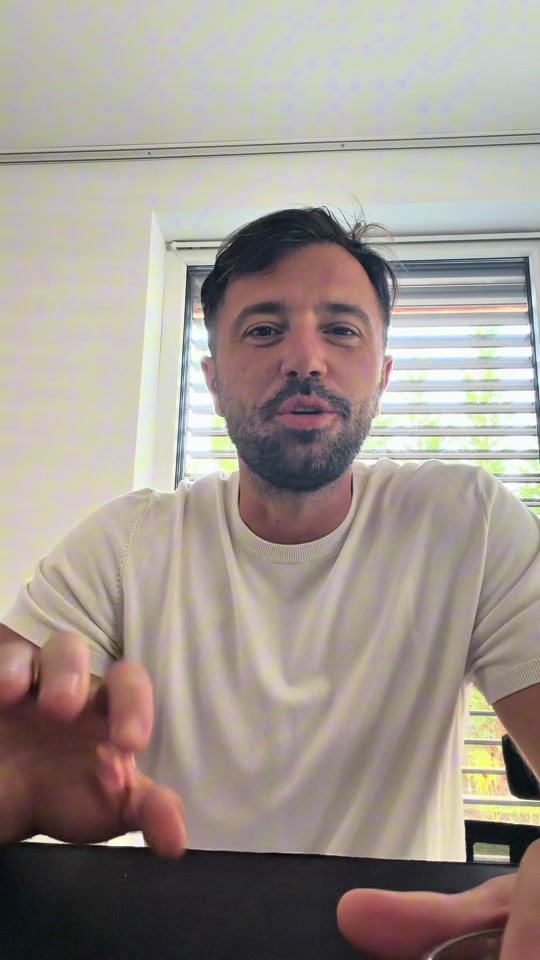
I had been reading messages and struggling to understand what some of them were trying to say. That frustration becomes a deliberately sharp suggestion in this video: give the parents a test too.
If we expect a teenager to read carefully, recognise an argument and work through a practical problem, can we demonstrate those things ourselves?
The useful part of that question is the mirror it holds up to adults. It is uncomfortable to demand a standard we have not tried to meet.
What the actual numbers establish
The OECD’s Kosovo note for PISA 2025 reports that 16% of assessed students reached at least Level 2 in reading, compared with 69% across OECD countries. The difference is 53 percentage points. ¹

These are student results. They do not measure their parents’ abilities and cannot tell us what proportion of Kosovo’s adults would pass a particular task. Turning that number into a claim about all adults would be making up evidence.
For the wider results and score changes, see my PISA overview. Here, I want to stay with the question the video raises about us.
A test should identify help, not assign human worth
In the clip I take the provocation further and link remedial learning to voting. That is a political suggestion in the video, not an existing rule or a conclusion justified by PISA. A literacy score is not a measure of a person’s dignity. Article 21 of the Universal Declaration of Human Rights sets out universal and equal suffrage. ²
The constructive educational question is how adults can recognise a gap and get support. Mocking someone for struggling does not supply the missing skill. Nor does pretending there is no gap.
Try the explanation, not just the answer
Here is an invented exercise: a €40 item is reduced by 25%. The saving is €10, and the new price is €30. If it then rises by 25%, it becomes €37.50, not €40. The second percentage applies to a different starting amount.

That small example is useful because it asks for an explanation. Which number is the percentage acting on? Why are the two changes not symmetrical? It is not an official PISA item and does not predict anybody’s test score.
Sit with a child and let both of you explain. If you are unsure, say so and work it out together. The adult does not have to perform omniscience. Showing how to check a mistake is itself a worthwhile example.
Before we demand better thinking from the next generation, let us make our own thinking visible.
Sources and calculation notes
-
¹ OECD: PISA 2025, Kosovo. Reading figures are rounded shares of the assessed student population, not adult-literacy estimates. Gap: 69 − 16 = 53 percentage points.
-
² United Nations: Universal Declaration of Human Rights, Article 21. The video’s voting-test suggestion is identified as the creator’s provocation, not endorsed by the assessment data.
-
Invented price exercise: 40 × 0.25 = 10; 40 − 10 = 30; 30 × 1.25 = 37.50. Reproducible inputs. No actual retailer or intervention effect is claimed.
-
Original video and thumbnail: Eduard Luta on TikTok. Published 2026-09-10. Research checked 26 September 2026.