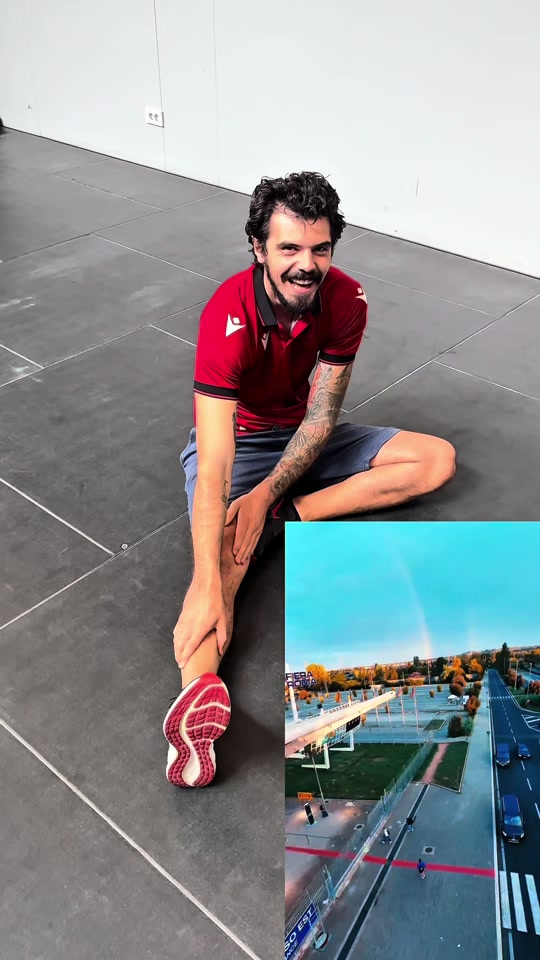
In this video I take you into one of our preparation sessions for HYROX Rome. The plan is four rounds: run a kilometre, complete an exercise, then return to the run.
It is a training diary. It is not a race result or a complete programme for someone else to copy. The useful thing to watch is the transition: how the next kilometre feels after doing something demanding with the rest of the body.
What we set out to do
The video follows a sequence of running, SkiErg, running, rowing, running, a farmer’s carry, another run and lunges. I describe increasing from the three rounds we had done previously to four.
There is a simple reason this kind of session interests me. Fresh running and running after a station are different experiences. The second asks you to settle into movement while carrying the fatigue from what came before.
The clip includes spoken times and loads, but I am not turning unclear numbers into a verified performance record. The clear comparison here is the planned number of one-kilometre runs.

Four kilometres is half the race’s running distance
HYROX describes its standard race as eight one-kilometre runs, each followed by a workout station. Our four-run session therefore contains 4 × 1 km = 4 km, compared with 8 × 1 km = 8 km in the full format.
That is 4 ÷ 8 × 100 = 50% of the running distance. Moving from three to four one-kilometre runs adds 1 km, or 1 ÷ 3 × 100 ≈ 33.3% relative to the earlier three-run session described in the video.

Neither percentage measures readiness. Half the running distance does not mean half the total effort, half the race time or a 50% chance of finishing. Our station selection and order also differ from the complete race. Race standards depend on the event and division; use the organiser’s current rules for those details.
| Comparison | Running distance |
|---|---|
| Earlier session described in the video | 3 km |
| This session’s four-run plan | 4 km |
| Standard full HYROX format | 8 km |
The part a stopwatch alone misses
A useful training note records more than the total time. Which transition was awkward? Did the next run begin too fast? Was the load controlled? Did technique change when fatigue arrived?
Those questions turn the session into information. A slower section can show where pacing needs attention. An easy first kilometre does not establish how the final one will feel. The point is to learn from the sequence rather than make the most flattering number the whole story.
I also like that this session is shared. The video has conversation and encouragement alongside the work. That is part of why I wanted to bring people along for it.
The arithmetic explains the session’s scale. It does not prescribe a training increase: a one-third jump in running volume inside one workout is a description of these numbers, not a rule to repeat. Adapt training to your condition and seek appropriate coaching where needed.
For the broader idea of separating an action from its outcome, see trying and visible progress.
Sources and calculation notes
-
HYROX: The Fitness Race, organiser’s description of the standard eight-run, eight-station format. The video documents preparation, not verified participation or a finishing result in Rome.
-
Arithmetic: 4 × 1 = 4 km; 8 × 1 = 8 km; 4 ÷ 8 = 50%; (4 − 3) ÷ 3 ≈ 33.3%. These concern running distance only. Calculation data.
-
Original video and thumbnail: Eduard Luta on TikTok. Published 2026-07-25. Research checked 26 September 2026.