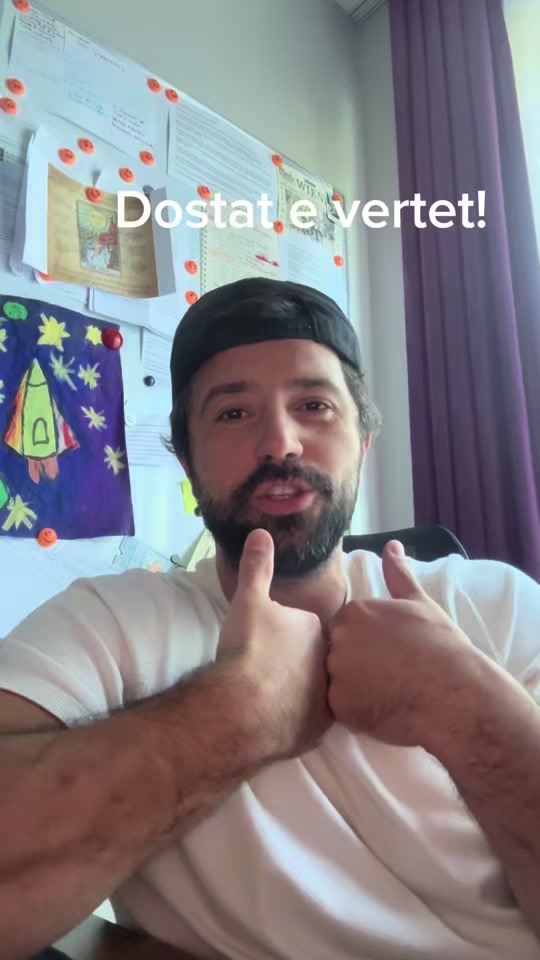
I was at the gym with friends when the thought behind this video arrived: what do I actually mean when I call someone a good friend?
In the recording I come back to two things. We help bring out something better in each other. And we can admire the way the other person is trying to live.
The first part has to go both ways. A relationship where one person gives every judgement and the other is never allowed to answer does not contain the kind of friendship I am describing.
Honesty needs somewhere to land
Useful feedback points to something you can understand. A missed commitment. A choice that seems to conflict with what you said you wanted. A part of an idea that needs more work.
A label about your whole character gives you much less to use. It can also make the conversation about defending yourself rather than examining what happened.
Here is an illustrative difference: noticing that a friend missed an agreed call leaves room to ask what happened. Declaring that they never care about anybody turns one incident into a verdict. The example is not a transcript of an argument from the video.

Admiration does not need a leaderboard
In the video I speak strongly about wanting friends who are also building themselves. The valuable part of that idea is example: someone’s patience, courage, curiosity or effort can make a possibility more visible to you.
That does not require a higher salary, a better body or constant achievement. A person can be going through a difficult period and still be a good friend. Rest, illness or a quiet life do not cancel what someone brings to a relationship.
I want a friendship that can hold growth and an ordinary bad week.
Otherwise, what looks like high standards can turn into a system where people only belong while they are performing well.
Ask the question in both directions
Can I tell this person something difficult? Can they tell me? Can either of us disagree without the relationship becoming a threat? Do we make room for each other’s lives, rather than only the part that overlaps with our own ambition?
These are reflection questions, not a scoring system for ranking friends. One uncomfortable conversation cannot answer them all. Patterns over time give the questions their meaning.

There is also the simpler work of presence: showing up, remembering, listening when there is nothing impressive to report. A friendship does not need every meeting to produce an improvement plan.
The related video about the person who believed first looks at the support we remember when something begins. This one is about the daily relationship that lets both people keep being honest.
Let me grow beside you without making either of us a project to fix.
Sources and calculation notes
-
This article develops the personal definition of friendship in the source video. Its conversation examples and diagrams are editorial, not psychological assessments or research measurements.
-
A quotation attributed to a political figure in the video caption has not been independently verified and is not reproduced as an authenticated quotation here.
-
Original video and thumbnail: Eduard Luta on TikTok. Published 2026-05-25. Research checked 26 September 2026.