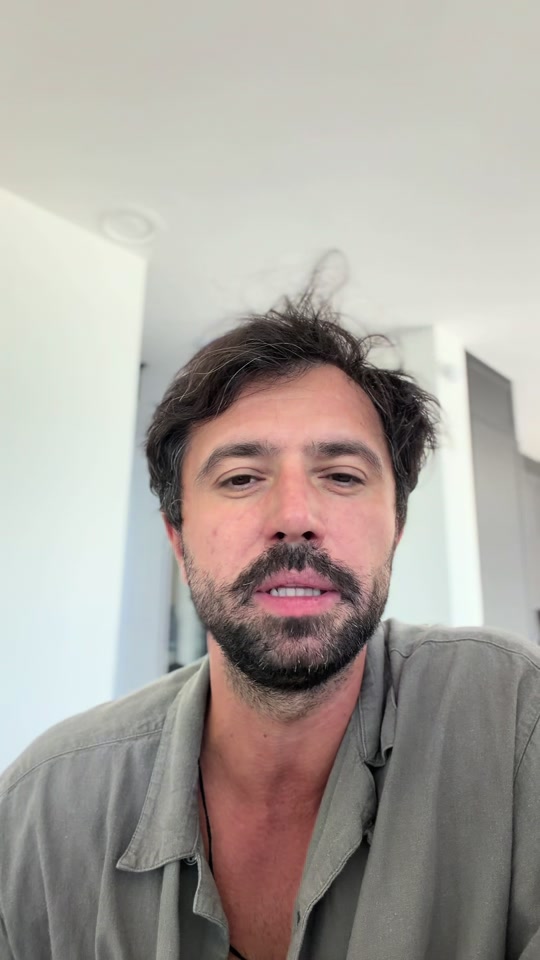
A woman’s spoken account affected me enough that I wanted to make this video. It brought me back to conversations about childhood and trauma during my time in Costa Rica: how a child can learn to notice an adult’s mood before anyone has said a word.
The footsteps. The way someone enters. The change in a room.
In the video I speak admiringly about people who read others so closely, and about those who decide that the pain they inherited will not be passed to their children.
There is an important distinction to add. Empathy, watchfulness and accurate understanding are not interchangeable. The video’s language about exceptional intelligence or predicting events should not be read as a clinical finding or evidence of a supernatural ability.
When noticing becomes a job
The National Child Traumatic Stress Network describes how children in unsafe environments may become unusually sensitive to adults’ moods. Adaptations that help amid danger can become difficult to live with in safer relationships. Its account of complex trauma does not mean that every attentive person has experienced trauma, or that a video can diagnose someone. [1]
That distinction changes how we speak about the ability to read a room. Calling it a gift may recognise someone’s sensitivity. It can also overlook the effort involved in never feeling able to stop.
No child should have to manage the emotional weather of the whole house.

A feeling is information, not a verdict
Imagine a quiet reply to a message. One reading is that the other person is angry. Another is that they are occupied. The feeling that arrives first may be strong; strength alone does not tell us which explanation is right.
This is an everyday illustration, not an account of a particular childhood or a diagnostic exercise. It shows why curiosity matters alongside sensitivity. Where the relationship is safe, asking can leave space for an answer that the first interpretation missed.
And if a situation actually is unsafe, the aim is safety and support, not persuading yourself to ignore what is happening.

What breaking the pattern could look like
For me, the central question in the video is about the next generation. What does a child experience when I come home? Do they get to remain a child, or do they have to work out how to handle me?
A practical response begins with ordinary adult responsibility: name a difficult day without making it the child’s fault; repair after speaking harshly; allow disagreement without turning it into a threat. These are commitments to consider, not a claim that a short checklist resolves trauma.
My travel experience is part of how I arrived at the question. It is not evidence that a retreat or psychedelic experience is a necessary or suitable treatment. If distress keeps shaping daily life, an appropriately qualified mental health professional can help assess support options.
In a child asking for help, I look at another small moment that reveals a family pattern. Here the hope is equally ordinary: a home where noticing everything is no longer a condition of feeling safe.
Sources and calculation notes
-
[1] National Child Traumatic Stress Network: Effects of Complex Trauma. Describes possible adaptations and difficulties, not a universal profile or an empathy test.
-
The source video contains a reaction to another speaker. Her full identity and the original spoken work have not been established here, so this article neither guesses an attribution nor reproduces the work. Examples and diagrams are editorial, not measured outcomes.
-
Original video and thumbnail: Eduard Luta on TikTok. Published 2026-08-31. Research checked 26 September 2026.